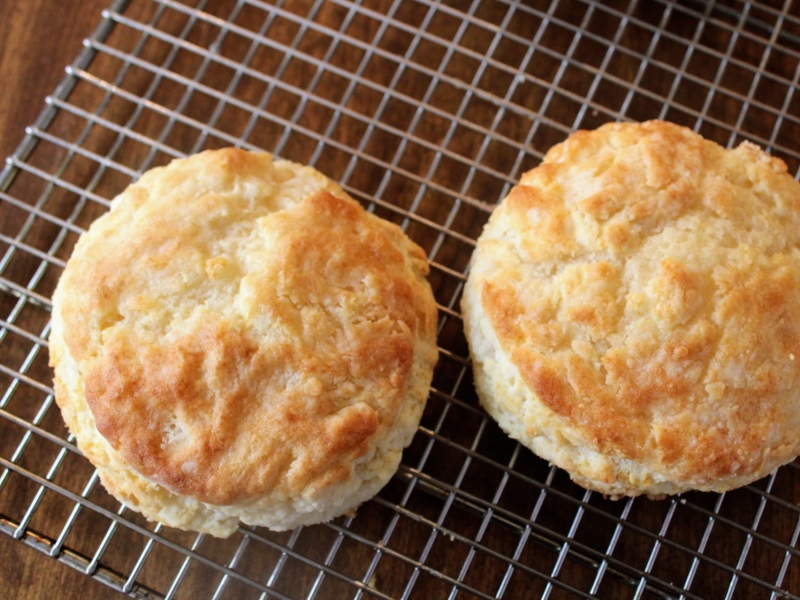
These Bojangles buttermilk biscuits are soft, tender, and layered with butter—made with self-rising flour and vegetable shortening for authentic restaurant-quality results at home.
3 grams baking soda (1/2 teaspoon - optional)optional
96 grams vegetable shortening (1/2 cup)
224 grams buttermilk (1 cup)
2 tablespoons melted butter, for topping
7 Ingredients
Delivery in as fast as one hour.*
Powered by
Prices vary by store
*Service fees apply. Instacart® and the Instacart logo are registered trademarks of Maplebear Inc. d/b/a Instacart.
Instructions
1
In a large bowl add self-rising flour, powdered sugar, salt, and baking soda. Mix these dry ingredients with a whisk or fork to thoroughly combine.
2
Using a dough cutter or your fingers, mash in the cold vegetable shortening until there are no bits of shortening larger than a pea.
3
Add this bowl to the freezer for 2 hours or the refrigerator overnight to ensure your shortening and flour are cold.
4
When you are 1 hour from bake time, preheat your oven to 450 F. You want the oven to be fully heated so keep it on for an hour.
5
When you are 15 minutes before baking time (45 minutes after preheating), add buttermilk to the bowl with the flour and shortening, and with a large spoon, stir the dough precisely 15 times. The dough will not come together, it will be shaggy. The dough should look a bit like cottage cheese.
6
Add this bowl back to the refrigerator to sit for 5 minutes. This time not only keeps everything cool but also allows for the buttermilk to hydrate the flour. This process is called the autolyse method. (use this term to impress your friends).
7
Lightly flour your work surface and then dump your cottage cheese-looking dough on top.
8
Lightly dust the top of your dough with flour and pat it down with your hands a little. Fold the right side up and over and then the left up and over, like a brochure. Pat this all down a little and then fold the dough in half from the back side.
9
Lightly flour the dough and also lightly flour your rolling pin. Roll the dough out to between 3/4 to an inch tall.
10
Using a round, floured biscuit cutter, cut out your biscuits. Cut straight down, DO NOT twist the cutter. In between each cut, you can dust the cutter with flour or dunk the cutter in your flour to coat it. This makes sure your cutter will not stick to the dough when cutting.
11
Place biscuits, an inch or so apart on a parchment or Silpat-lined baking sheet and place that sheet on an upper rack of the oven.
12
Bake for 12 to 15 minutes or until the tops of the biscuits are browned.
13
Paint each biscuit with melted butter to ensure that the tops are flavorful.
Was this recipe helpful?
Tips & Notes
Pro tips
Keep shortening and buttermilk ice-cold to prevent gluten overdevelopment and maximize flakiness.
Cut dough gently with a sharp biscuit cutter and avoid twisting—this seals edges and prevents rising.
Brush melted butter on warm biscuits immediately after baking for rich flavor and shine.
Use self-rising flour as written; substituting all-purpose requires adding leavening separately and may alter texture.
Substitutions
vegetable shortening → cold unsalted butter (results will be slightly less flaky)
buttermilk → regular milk + 1 tablespoon lemon juice or vinegar, let sit 5 minutes (replicates acidity)
self-rising flour → all-purpose flour + 1.5 teaspoons baking powder + 0.5 teaspoon salt per cup (measure carefully)
Storage & make-ahead
Store cooled biscuits in an airtight container at room temperature for up to 2 days, or freeze for 3 months; reheat wrapped in foil at 350°F for 10–12 minutes.
Common Questions
Can I use butter instead of vegetable shortening?
You can substitute butter 1:1, though the biscuits will be slightly less flaky. For best results, keep it cold and cut into small pieces like the shortening.
Why use vegetable shortening in biscuits?
Shortening creates flakier layers because it doesn't contain water like butter, and it has a higher melting point, keeping biscuits tender during baking.
Can I make the dough ahead of time?
Yes. Prepare the dough, cover it, and refrigerate for up to 4 hours before cutting and baking. This can actually improve flakiness.
What's the purpose of baking soda if it's optional?
Baking soda reacts with buttermilk acid for extra lift and browning. It's optional but recommended for a lighter, more tender crumb.
How do I know when biscuits are done?
Biscuits are ready when the tops are golden brown and the sides feel firm to the touch, typically 12–15 minutes at 400°F.