Homemade capicola is a dry-cured pork neck prepared with kosher salt, Cure #2, and warm spices like cinnamon and cloves. This recipe yields authentic Italian-style charcuterie using precise percentage-based ratios for reliable results.
*Service fees apply. Instacart® and the Instacart logo are registered trademarks of Maplebear Inc. d/b/a Instacart.
Instructions
1
Trim the meat into a boneless, uniform shape. Make sure there are no cuts in the meat where bacteria could enter, and cut off any loose pieces.
2
Weigh the coppa in grams. Divide by 1000, then multiply each ingredient by that number. For example, if your coppa weighs 2650 g, you need to multiply the ingredients specified above by 2.65.
3
Mix all the salt and the seasonings together, and rub on the meat. Place the coppa and all the extra salt and seasonings in a vacuum-sealable bag and seal. You can also use a Ziploc bag.
4
Place the bag in the fridge for 7 days. Flip the bag every day or so.
5
After 7 days have passed, remove the meat from the bag and gently scrape off any excess salt and seasonings.
6
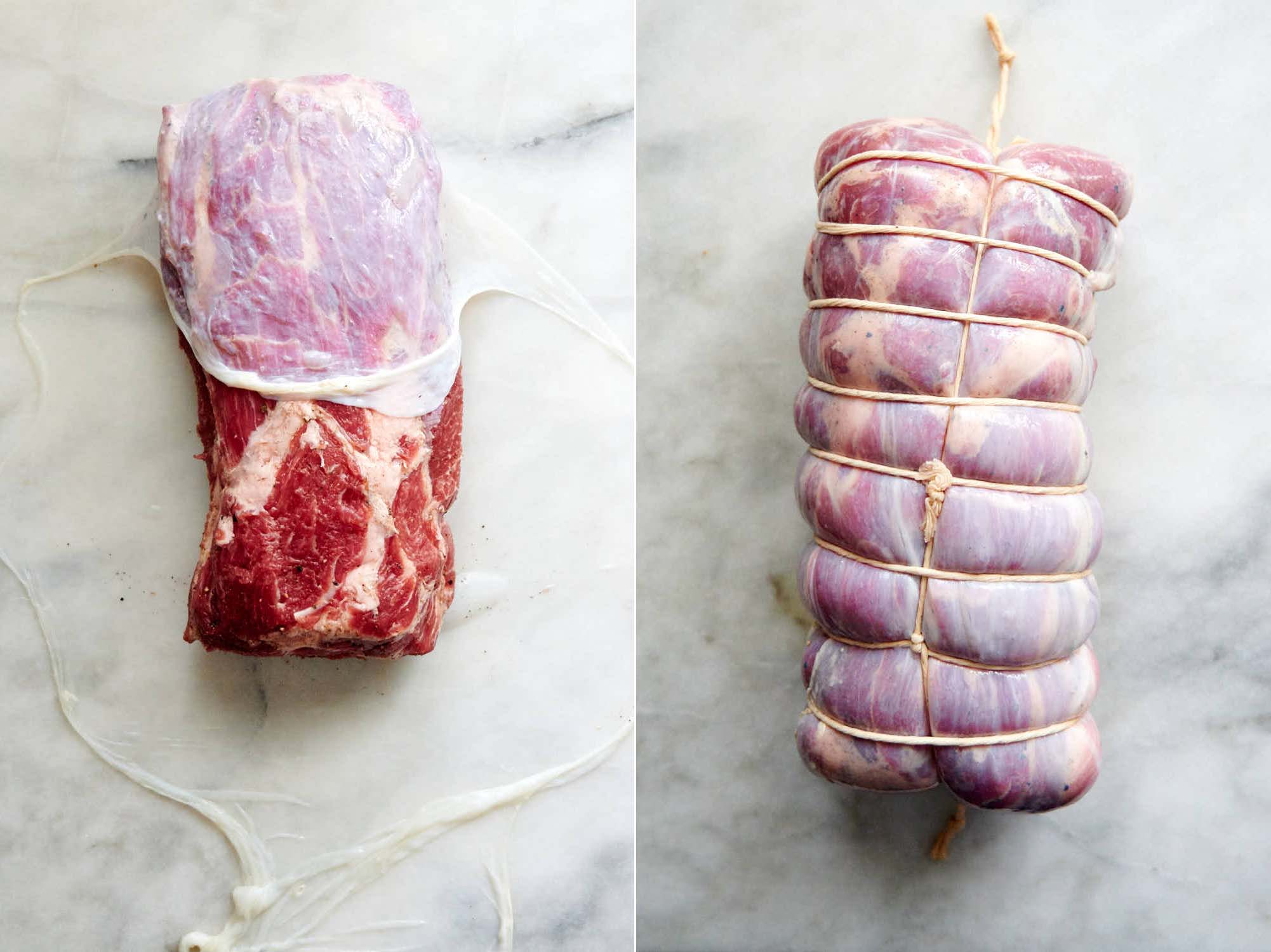
Prepare the coppa for hanging by casing (veil, beef bung) and trussing. Poke a lot of small holes all over the surface with a sterilized needle to remove any trapped air.
7
Spray with white mold solution.
8
Weigh the meat and write it down on a tag. Attach the tag to the meat.
9
Hang and dry in the curing chamber for about 7 days as per the schedule below in the note section.
10
Mature in the curing chamber at 55F - 57F (13C - 14C) and 80% - 82% for 3+ months.
11
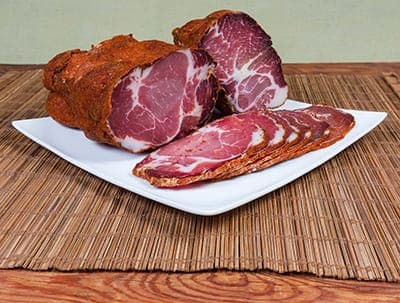
When the meat is ready, remove the casing, slice as thin as possible and enjoy.
Was this recipe helpful?
Tips & Notes
Pro tips
Weigh ingredients as percentages of the meat weight (2.75% salt, 0.25% Cure #2) rather than volume for consistency across batches.
Crack black pepper coarsely before mixing with the cure to maximize flavor distribution without over-breaking the spices.
Monitor humidity during the drying phase; 60–75% relative humidity prevents case hardening on the outside while the inside cures evenly.
Insert a clean probe thermometer to verify internal temperature reaches 160°F before consuming, especially on your first attempt.
Storage & make-ahead
Wrap finished capicola in parchment or muslin and refrigerate for up to 3 months, or freeze for up to 12 months. Slice thin and serve at room temperature.
Equipment
kitchen scale (digital, for precise gram measurements) · cheesecloth or muslin for wrapping · meat thermometer · humidity meter (hygrometer) for monitoring cure environment
Common Questions
What's the difference between capicola and coppa?
Capicola and coppa refer to the same cut and cured product—the name varies by region (capicola in Southern Italy, coppa in Northern Italy). This recipe uses pork neck (coppa), the traditional muscle.
Why is Cure #2 necessary?
Cure #2 (sodium nitrite) prevents botulism in cured meats and develops the characteristic pink color and flavor. It's essential for safe dry-curing at home.
How long does homemade capicola take?
Curing typically takes 1–3 weeks depending on thickness, followed by drying for 4–8 weeks. Total time is usually 6–12 weeks for a finished product.
Can I scale this recipe?
Yes. Use the percentages listed (salt 2.75%, Cure #2 0.25%, spices as shown) and multiply by your desired pork weight for consistent results.
What equipment do I need?
A kitchen scale for precise measurement, cheesecloth or muslin for wrapping, and a cool, humid space (50–70°F, 60–75% humidity) for curing and drying.
Keep Cooking
One Pot Garlic Chicken Pasta
30 min
BEST Zuppa Toscana
40 min
Zuppa Toscana
55 min
Spicy Italian Sub
25 min
How To Make Capicola
Gemelli Pasta with Creamy Mushroom Sauce
40 min
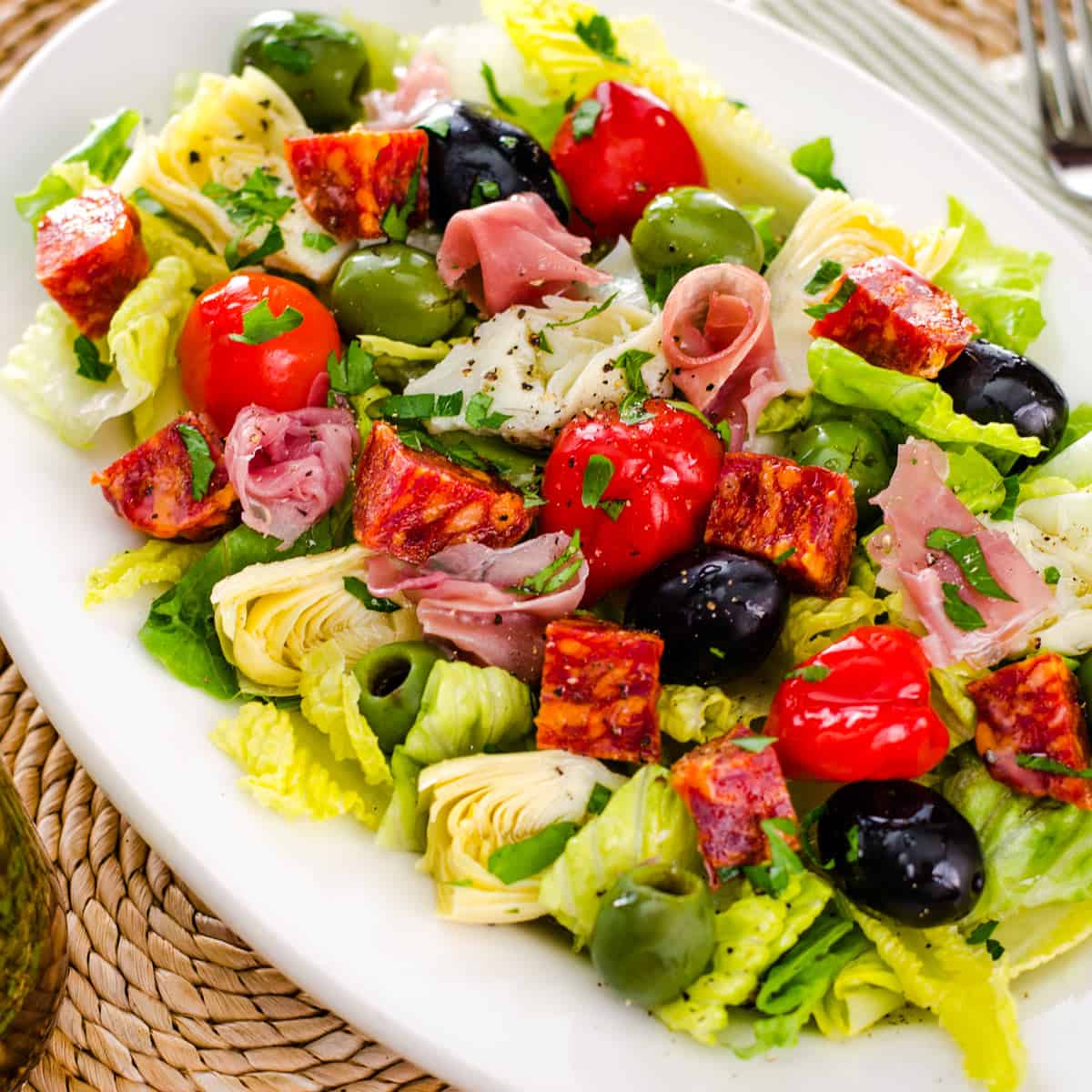
Antipasto Salad
10 min
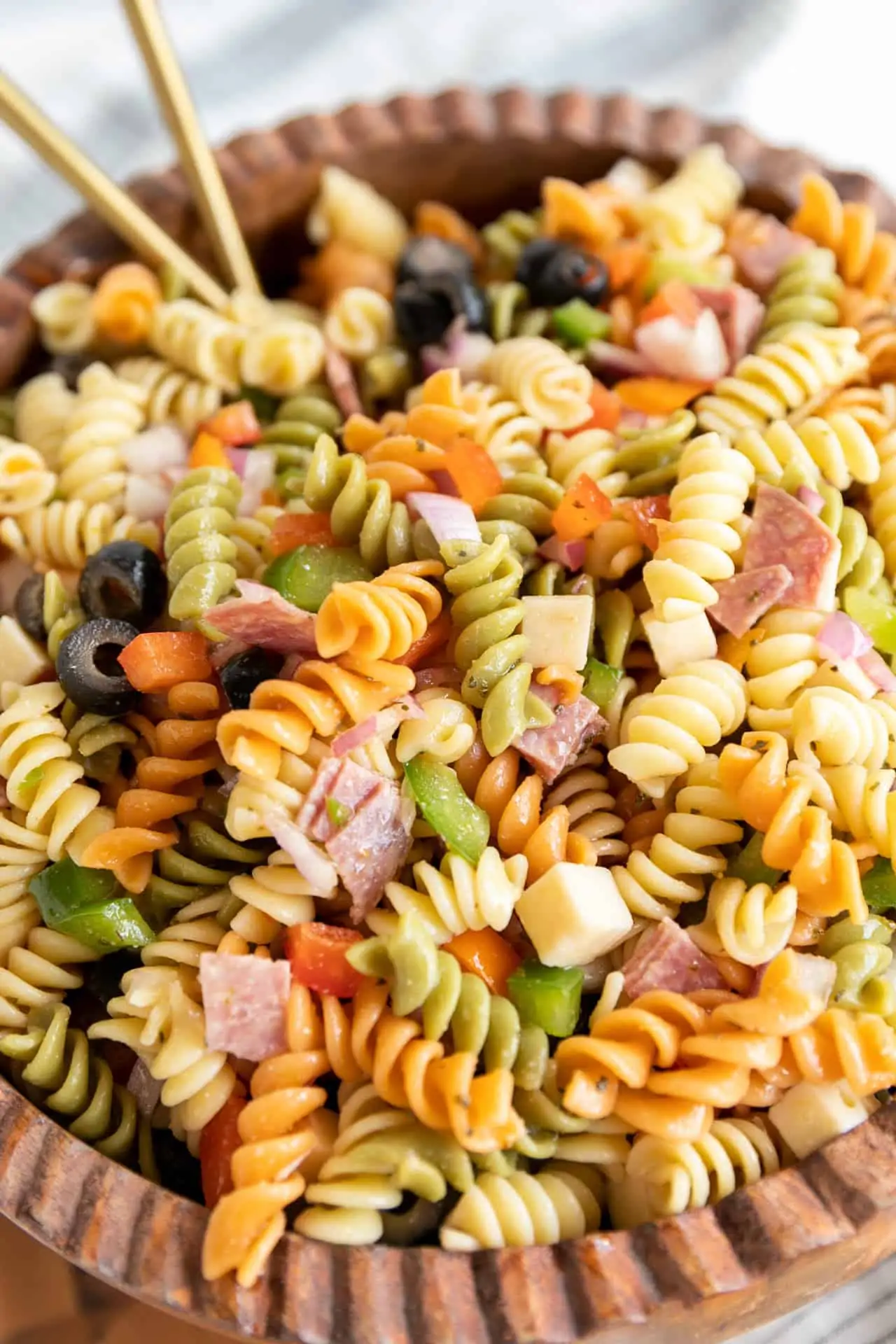
Antipasto Pasta Salad with Italian Vinaigrette Dressing