Homemade Sauerkraut
Homemade sauerkraut made with a precise salt-by-weight method ensures consistent fermentation and balanced tang every batch. This German classic uses green cabbage, caraway seeds, and peppercorns for authentic flavor.
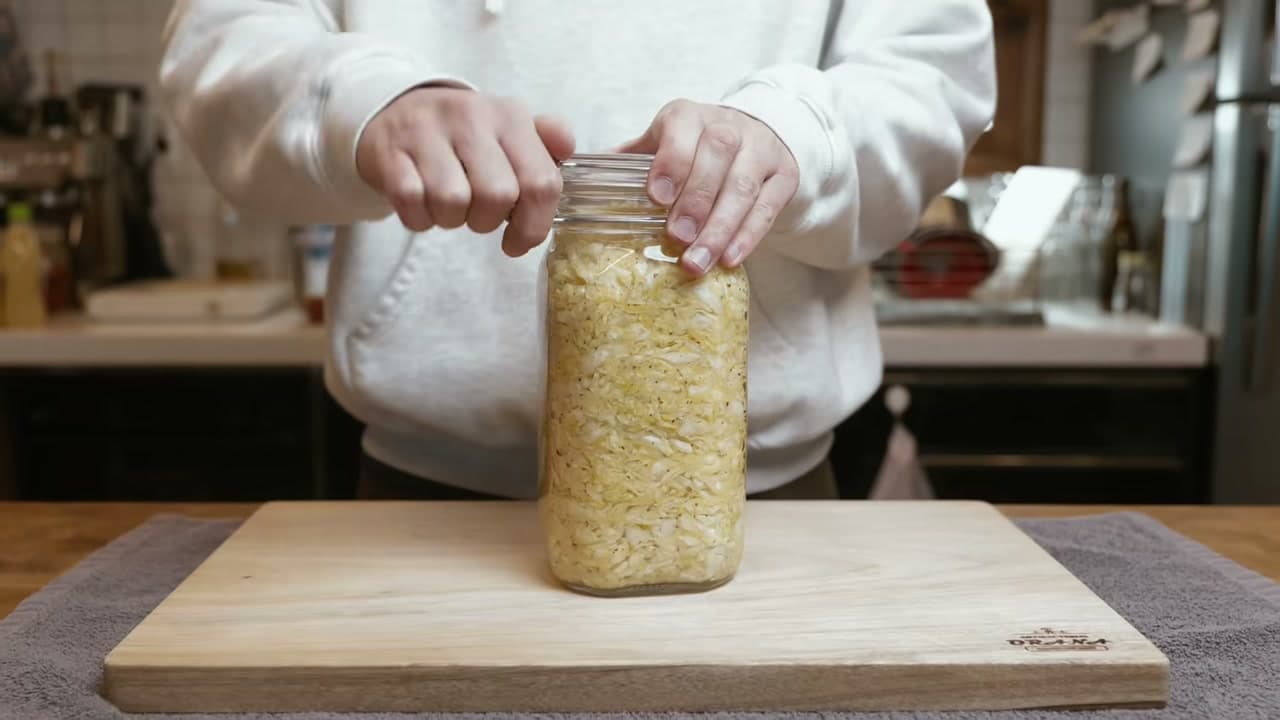
Homemade sauerkraut made with a precise salt-by-weight method ensures consistent fermentation and balanced tang every batch. This German classic uses green cabbage, caraway seeds, and peppercorns for authentic flavor.
Check what you already have. We'll leave it off your shopping list.
CookOS may earn a commission from Instacart orders.

Prices vary by store
*Service fees apply. Instacart® and the Instacart logo are registered trademarks of Maplebear Inc. d/b/a Instacart.
Remove the outer leaves, core, and thinly slice the head of cabbage.
Place all the shredded cabbage into a large, non-reactive bowl or container and weigh it.
Calculate 2% of the cabbage's total weight to determine the exact amount of salt needed. For example, 1361g of cabbage requires 27.22g of salt.
In a small bowl, combine the measured fine sea salt, freshly ground black pepper, and lightly crushed caraway seeds.
Sprinkle the salt and spice mixture over the shredded cabbage.
Using your hands, vigorously massage and squeeze the cabbage for 5-10 minutes. The cabbage will wilt and release its natural juices, creating a brine.
Thoroughly clean and sanitize a large glass jar.
Tightly pack the cabbage into the jar, a handful at a time. Use a tamper or the end of a rolling pin to press down firmly after each addition, removing air pockets.
Continue packing until all the cabbage is in the jar and is fully submerged beneath its own brine.
Wipe the rim of the jar clean and seal it tightly.
Let the jar ferment at room temperature, away from direct sunlight, for 1-4 weeks. 'Burp' the jar daily by briefly opening the lid to release built-up gas, then reseal.
Once the sauerkraut has reached your desired level of tanginess, transfer it to the refrigerator to halt the fermentation process.
Transfer fermented sauerkraut to clean jars and refrigerate to halt fermentation. Keeps 4–6 months refrigerated in sealed jars. No reheating needed; serve cold or add to warm dishes at the end.
fermentation jar or glass crock (1–2 liter minimum) · fermentation weight or glass lid to keep cabbage submerged · kitchen scale (essential for accurate salt-by-weight ratio)
Use 2% salt by weight of the cabbage. For 1361g cabbage, that's 27.22g fine sea salt, ensuring proper fermentation and preservation without over-salting.
Fermentation typically takes 3–6 weeks depending on room temperature. Warmer conditions (68–75°F) speed fermentation; cooler temps slow it. Taste after 3 weeks and ferment longer for more tang.
No. Table salt contains anti-caking agents and iodine that cloud brine and interfere with fermentation. Use fine sea salt or pickling salt only.
Cabbage must stay submerged to prevent mold. Massage the cabbage vigorously to release its juices, which create brine. Add a fermentation weight or cabbage leaf to keep everything below the liquid surface.
Yes. Salt and natural lactobacillus fermentation preserve sauerkraut safely in the jar at room temperature during fermentation, then in the refrigerator long-term.