Korean-American Bulgogi Animal Style Fries
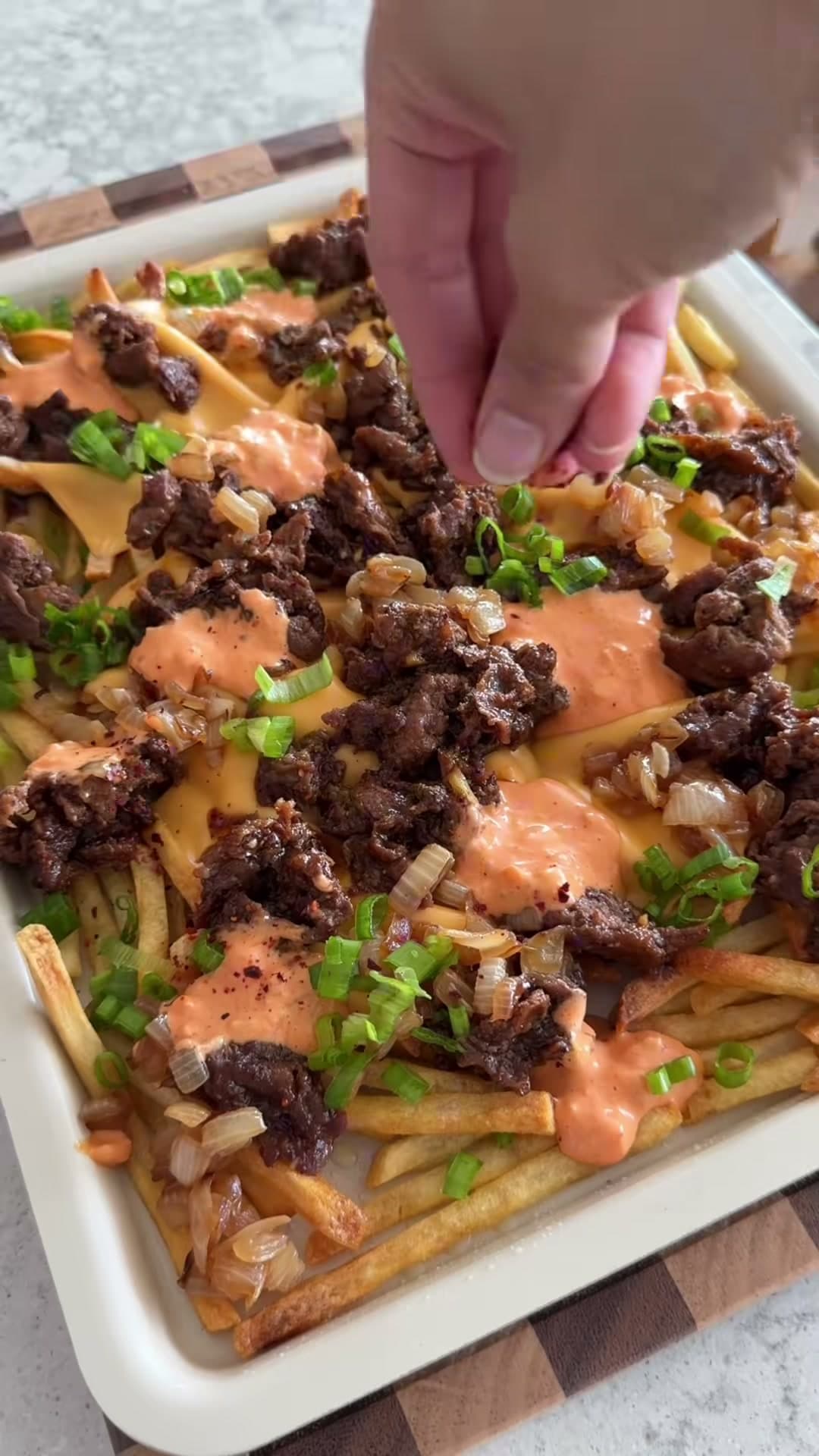
Korean-American bulgogi animal style fries combine crispy fries with tender soy-ginger beef, caramelized onions, melted cheese, and a spicy kimchi-gochujang sauce for a fusion take on the In-N-Out classic.
Total
45 minServings
4Ingredients
Check what you already have. We'll leave it off your shopping list.

21 Ingredients
CookOS may earn a commission from Instacart orders.
Powered by
Prices vary by store
*Service fees apply. Instacart® and the Instacart logo are registered trademarks of Maplebear Inc. d/b/a Instacart.
Instructions
- 1
Begin by caramelizing the onions. Heat olive oil in a skillet over medium-low heat, add the diced onion, and cook slowly. Add water periodically to prevent burning and encourage caramelization. This process can take 20-25 minutes.
- 2
Towards the end of cooking, add a pinch of sugar to the onions to enhance their sweetness. Once deeply golden and soft, remove from heat and set aside.
- 3
While the onions cook, prepare the sauce. In a small bowl, combine mayonnaise, gochujang, and finely chopped kimchi. Mix until well combined and set aside.
- 4
Prepare the bulgogi marinade. In a separate bowl or jar, whisk together soy sauce, brown sugar, minced ginger, minced garlic, pear puree, sesame oil, and gochugaru.
- 5
Cook the french fries according to the package instructions until golden brown and crispy.
- 6
While the fries are cooking, heat a large skillet over medium-high heat. Add the thinly shaved beef and season with salt, pepper, and chili powder.
- 7
Cook the beef, breaking it apart, until it is mostly browned.
- 8
Pour the prepared marinade over the beef and continue to cook, stirring, until the sauce thickens and glazes the meat.
- 9
Once the fries are done, place them in a large serving dish. Immediately top with slices of American cheese so they melt over the hot fries.
- 10
Layer the cooked bulgogi beef over the cheesy fries, followed by the caramelized onions.
- 11
Drizzle the kimchi-gochujang sauce over the top.
- 12
Garnish with chopped green onions and an extra sprinkle of gochugaru, if desired. Serve immediately.
Was this recipe helpful?
Tips & Notes
Pro tips
- Caramelize onions low and slow (8–10 minutes) with a pinch of sugar to develop deep sweetness that balances the spicy sauce.
- Toast fries in a 300°F oven for 2–3 minutes after cooking to restore crispness before topping.
- Mix the gochujang sauce while fries are still warm so the cheese melts into the layers.
- Finely chop kimchi to avoid large pieces sliding off; reserve a little kimchi juice to thin the sauce if too thick.
Substitutions
- Gochujang → sriracha mixed with soy sauce (use 1 tbsp sriracha + 1 tsp soy sauce; less umami, more vinegar tang)
- Kimchi → Korean radish kimchi or cabbage kimchi (slightly different fermented funk, same texture)
- Brown sugar → honey (1 tsp honey for 1 tbsp brown sugar in bulgogi marinade; adds floral note)
- Soy sauce → tamari (gluten-free option; 1:1 swap, slightly less sodium)
Storage & make-ahead
Assemble just before eating. Store cooked fries, bulgogi, caramelized onions, and sauce separately in airtight containers in the fridge for up to 3 days; reheat fries in a 400°F oven for 3–4 minutes to restore crispness.
Common Questions
Can I make the kimchi-gochujang sauce ahead of time?
Yes. Mix the mayonnaise, gochujang, and chopped kimchi up to 2 days ahead and refrigerate. Let it come to room temperature before serving for best flavor.
How do I prevent the fries from getting soggy?
Assemble just before serving. Keep fries warm in a low oven, then top with sauce, cheese, onions, and bulgogi immediately before eating.
Can I use store-bought bulgogi beef?
Yes. Pre-marinated bulgogi from Asian grocery stores or rotisserie beef work well; just warm and shred before topping the fries.
What type of cheese works best?
American cheese melts smoothly and won't overpower the Korean flavors. Cheddar or a mild white cheese are good alternatives.
How spicy is the kimchi-gochujang sauce?
Moderately spicy depending on gochujang heat level and kimchi choice. Reduce gochujang to 1 tbsp for milder heat, or add more for extra kick.