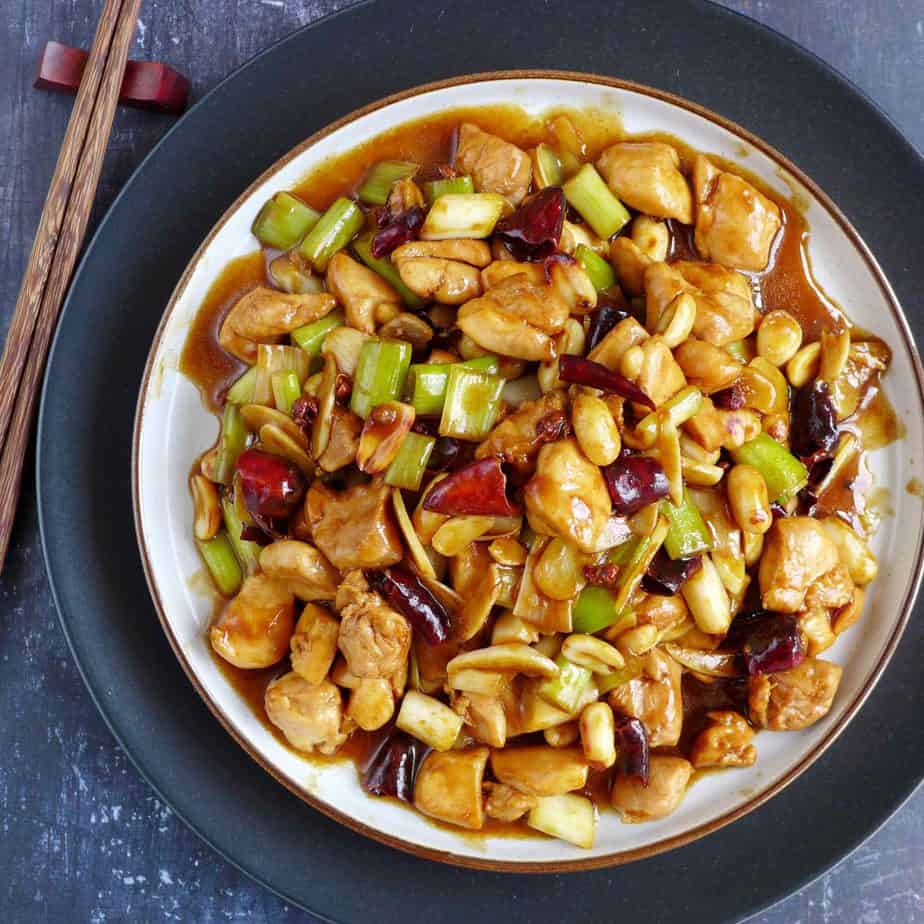
Kung Pao Chicken
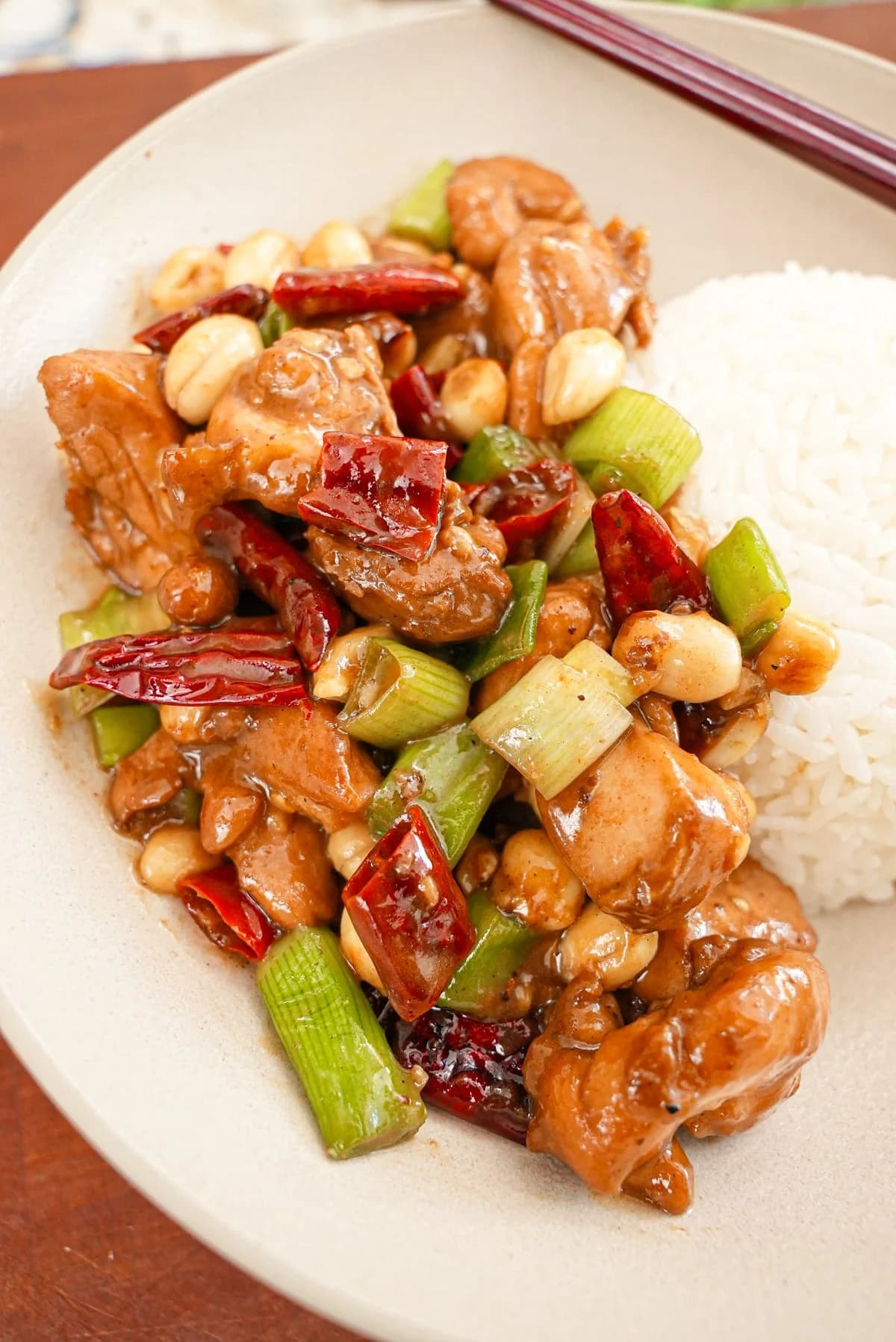
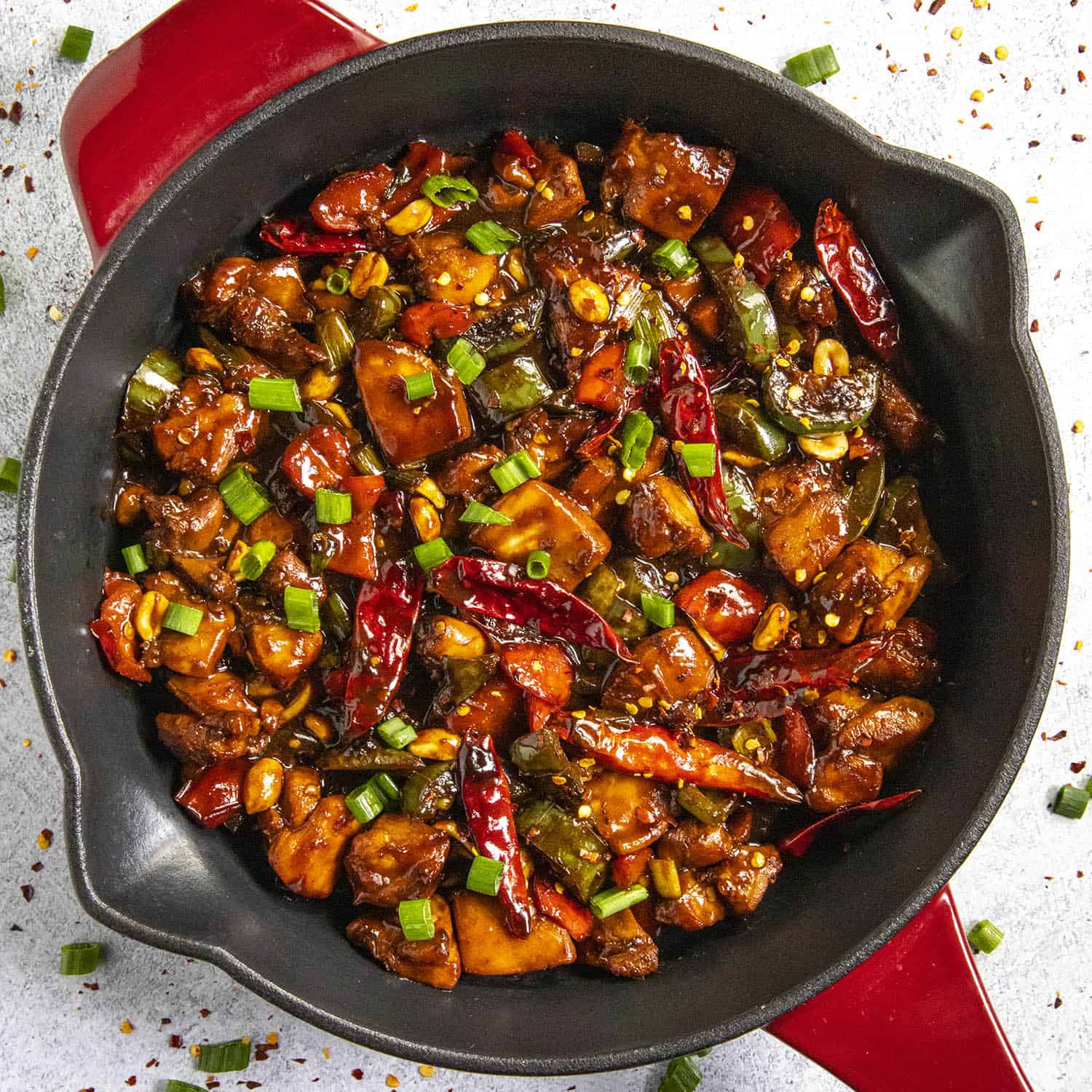
Authentic Kung Pao Chicken pairs tender cubed chicken breast with a balanced dark soy and black vinegar sauce, finished with roasted peanuts and Szechuan peppercorns for authentic heat and numbing spice.
Authentic Kung Pao Chicken pairs tender cubed chicken breast with a balanced dark soy and black vinegar sauce, finished with roasted peanuts and Szechuan peppercorns for authentic heat and numbing spice.
Check what you already have. We'll leave it off your shopping list.
CookOS may earn a commission from Instacart orders.

Prices vary by store
*Service fees apply. Instacart® and the Instacart logo are registered trademarks of Maplebear Inc. d/b/a Instacart.
Cut the chicken into ¾-inch cubes and place in a medium bowl. Sprinkle in the cornstarch, salt, soy sauce, Chinese wine, and sesame oil and give a good toss.
. In a small bowl, whisk the dark soy sauce, Chinese black vinegar, sugar, water and white pepper. Make sure sugar gets mixed in.
Chop the garlic, ginger, and scallions and place them near the stove with all the remaining ingredients.
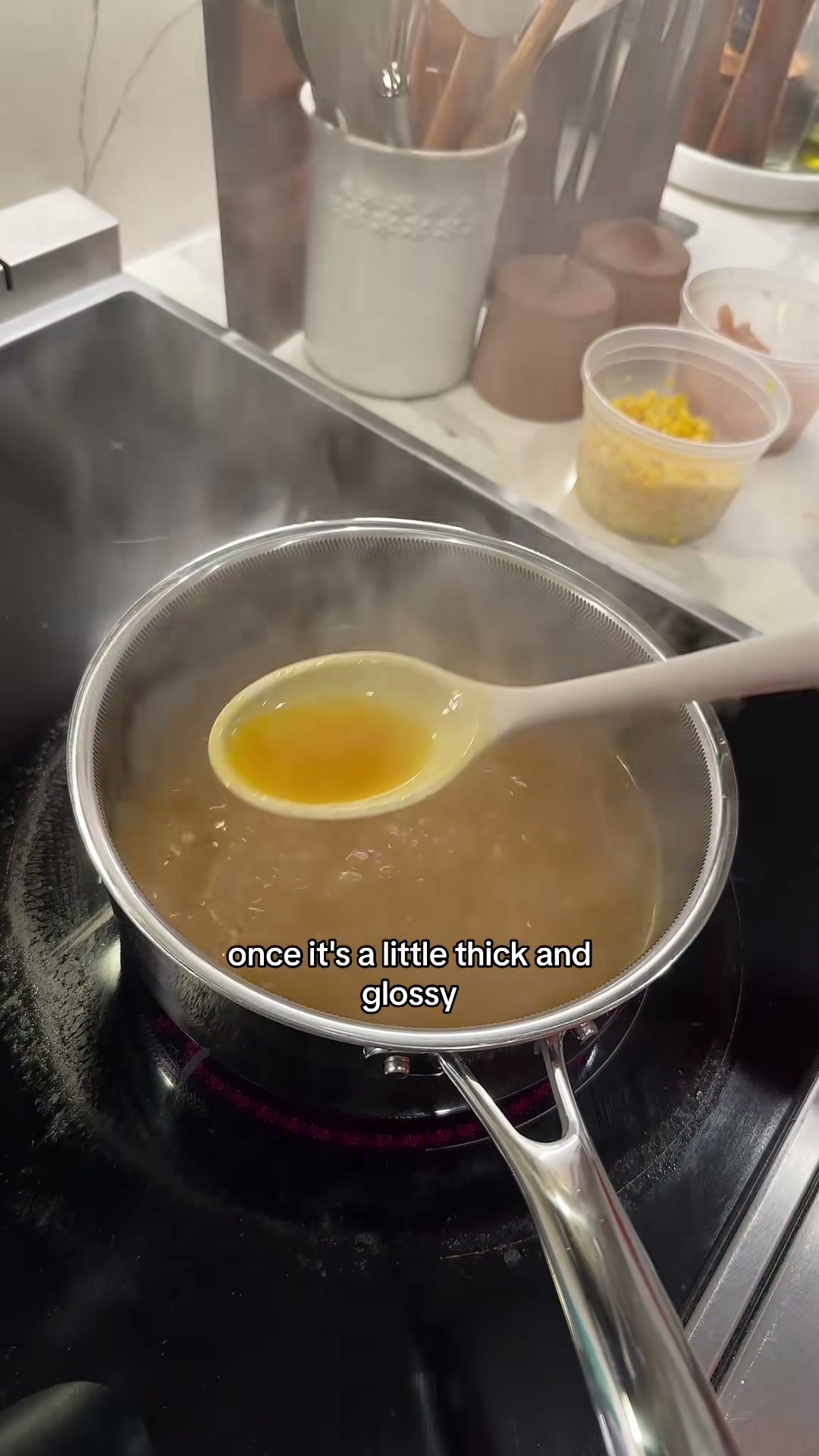
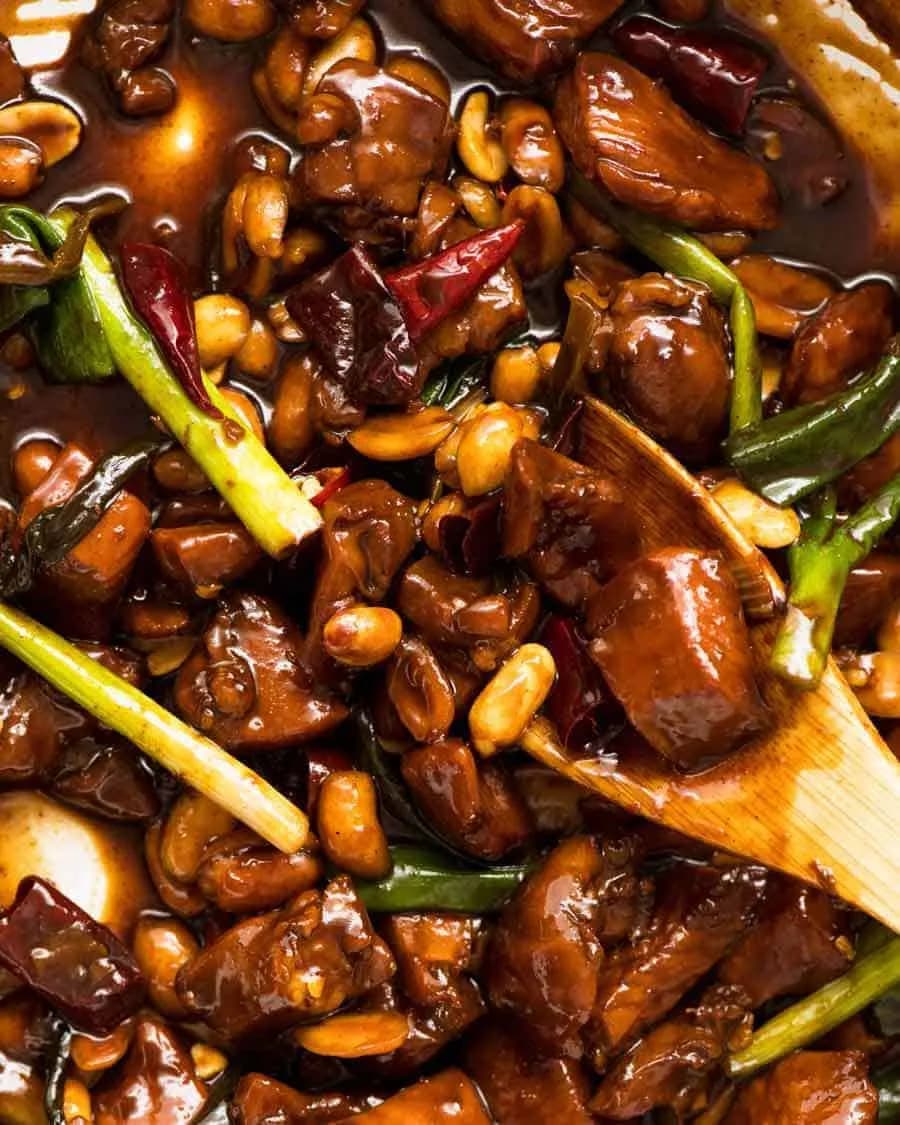
Turn your hood fan on. Heat a wok or large non-stick skillet over medium-high heat. Add the peanut oil, and when hot, stir in the garlic, ginger, dried chiles, and Szechuan peppercorns, stirring constantly for for 30-45 seconds. Don’t breathe it in! Add the chicken and its marinade, stirring often until all the pink is gone, abut 3 minutes. Add celery if using. Lower heat to medium, pour in the kung pao sauce, scraping the bowl (to get all the sugar), and bring it to a simmer, add the scallions while stirring for 1-2 mintues. Let the sauce thicken, and the chicken cook through. Stir in the peanuts.
Taste and adjust salt and spice levels to your liking. Add more black vinegar or sugar if you like.
over rice, or in lettuce wraps.
Store leftover kung pao chicken in an airtight container in the refrigerator for up to 3 days. Reheat gently in a wok or skillet over medium heat to avoid drying out the chicken.
wok or large non-stick skillet · small bowl for sauce
Yes, the recipe explicitly states you can substitute chicken thigh for breast. Thighs will stay more tender and juicy during stir-frying.
Dark soy sauce is thicker, darker, and sweeter than regular soy sauce. It adds depth and color to the kung pao sauce. Light soy sauce is used in the marinade for a different purpose.
Thai chilies are much hotter and have a different flavor profile than Chinese dried red chilies. Chinese chilies provide the authentic heat and taste for this dish without overwhelming spice.
Remove seeds from dried chilies before cooking to reduce heat, or use fewer chilies (start with 5 instead of 15). You can also taste and adjust after cooking as step 5 suggests.
Prepare the sauce and marinade up to 1 day ahead. Stir-fry the chicken fresh just before serving for best texture, as reheated chicken can become dry.