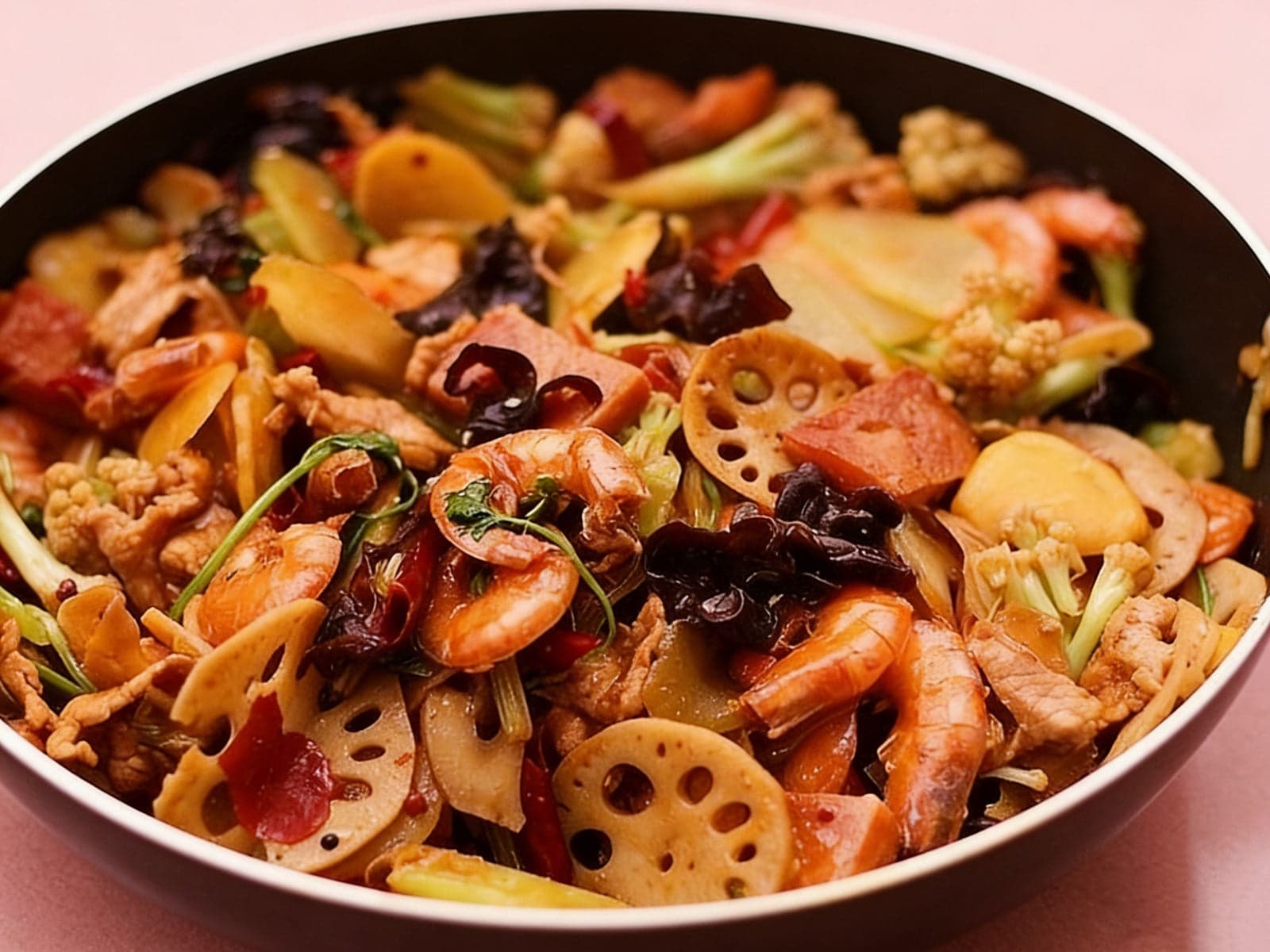
Lu rou fan is a Taiwanese rice bowl topped with tender braised pork belly, eggs, and mushrooms in a savory-sweet soy reduction. It's a deeply flavored, unfussy comfort dish that rewards low-and-slow cooking.
1 lb skin-on pork belly ((450g, cut into 1/2” pieces))
2 teaspoons oil
0.9 oz. rock sugar ((25g, or about 1 1/2 tablespoons granulated sugar))
1 small onion or a couple of shallots ((diced))
8 shiitake mushrooms ((diced into 1/2” pieces))
1/4 cup shaoxing wine ((60 ml))
3 tablespoons light soy sauce ((45 ml))
2 tablespoons dark soy sauce ((30 ml))
2 cups water ((475 ml))
4 hardboiled eggs ((peeled, optional))optional
3 star anise
1 cinnamon stick
6 cloves
3 bay leaves
2 teaspoons Sichuan peppercorns
2 pieces dried tangerine peel
2 slices fresh ginger
17 Ingredients
Delivery in as fast as one hour.*
Powered by
Prices vary by store
*Service fees apply. Instacart® and the Instacart logo are registered trademarks of Maplebear Inc. d/b/a Instacart.
Instructions
1
Bring a medium pot of water to a boil (just enough so that the pork will be fully submerged), and blanch the chopped pork belly for 1 minute. Drain, rinse clean of any scum, and set aside.
2
Heat the oil in a wok over low heat, and add the sugar. Cook the sugar until it starts to melt and then add the onions. Turn up the heat to medium high and stir-fry the onions for a minute. Add the mushrooms and stir-fry for another couple minutes.
3
Add the blanched pork, shaoxing wine, light soy sauce, dark soy sauce and water. Stir and bring the mixture to a boil. Once boiling, add the spices (which should be tied in cheese cloth), along with the peeled hardboiled eggs and turn the heat to the lowest setting. Simmer for 1 1/2 hours, stirring occasionally to prevent sticking.
4
At this point the meat should be fall-apart tender. To finish the dish, remove the spice packet and turn up the heat to medium high to thicken the sauce, stirring occasionally. This process should take about 5-minutes. The sauce should be thick enough to coat a spoon, but there should still be plenty of it left. Serve over steamed white rice.
Was this recipe helpful?
Tips & Notes
Pro tips
Render the pork belly's fat in the dry pan first (2–3 minutes) before adding oil; this builds flavor and improves texture.
Caramelize the rock sugar by stirring constantly as it melts—this creates depth and prevents crystallization in the final glaze.
Skim any foam or impurities from the surface during the first 10 minutes of simmering to keep the braising liquid clear and rich.
Undercook the rice slightly if serving immediately; residual heat and liquid from the pork continue cooking the grains.
Substitutions
rock sugar → granulated sugar (1 tablespoon, dissolves faster; flavor is identical)
shiitake mushrooms → cremini or button mushrooms (milder umami; use same weight)
shaoxing wine → dry sherry or mirin (1/4 cup, same volume; avoid cooking wine)
Storage & make-ahead
Store the braised pork in its cooking liquid, refrigerated, for up to 3 days. Reheat gently on the stovetop over low heat, stirring occasionally, or microwave in 30-second intervals until hot through.
Common Questions
Can I use pork shoulder instead of pork belly?
Yes, pork shoulder works well and yields a leaner result. Cut into 1/2-inch pieces and expect similar braising time. Pork belly is richer and more traditional, but both deliver tender, flavorful meat.
How do I know when the pork is done braising?
The pork should be fork-tender and the braising liquid should reduce to a glossy glaze that coats the meat. This typically takes 60–90 minutes on a gentle simmer. Meat should break apart easily.
Can I make lu rou fan ahead?
Yes. Braise the pork up to 2 days in advance, cool, and refrigerate in the braising liquid. Reheat gently on the stovetop or microwave before serving over fresh rice.
What if I don't have shaoxing wine?
Dry sherry or mirin are acceptable substitutes. Use the same volume (1/4 cup). Avoid regular cooking wine, which can be too acidic.
How do I scale this recipe?
All ingredients scale linearly. Double or halve the quantities and keep the simmering time the same—braising time depends on meat thickness, not total volume.