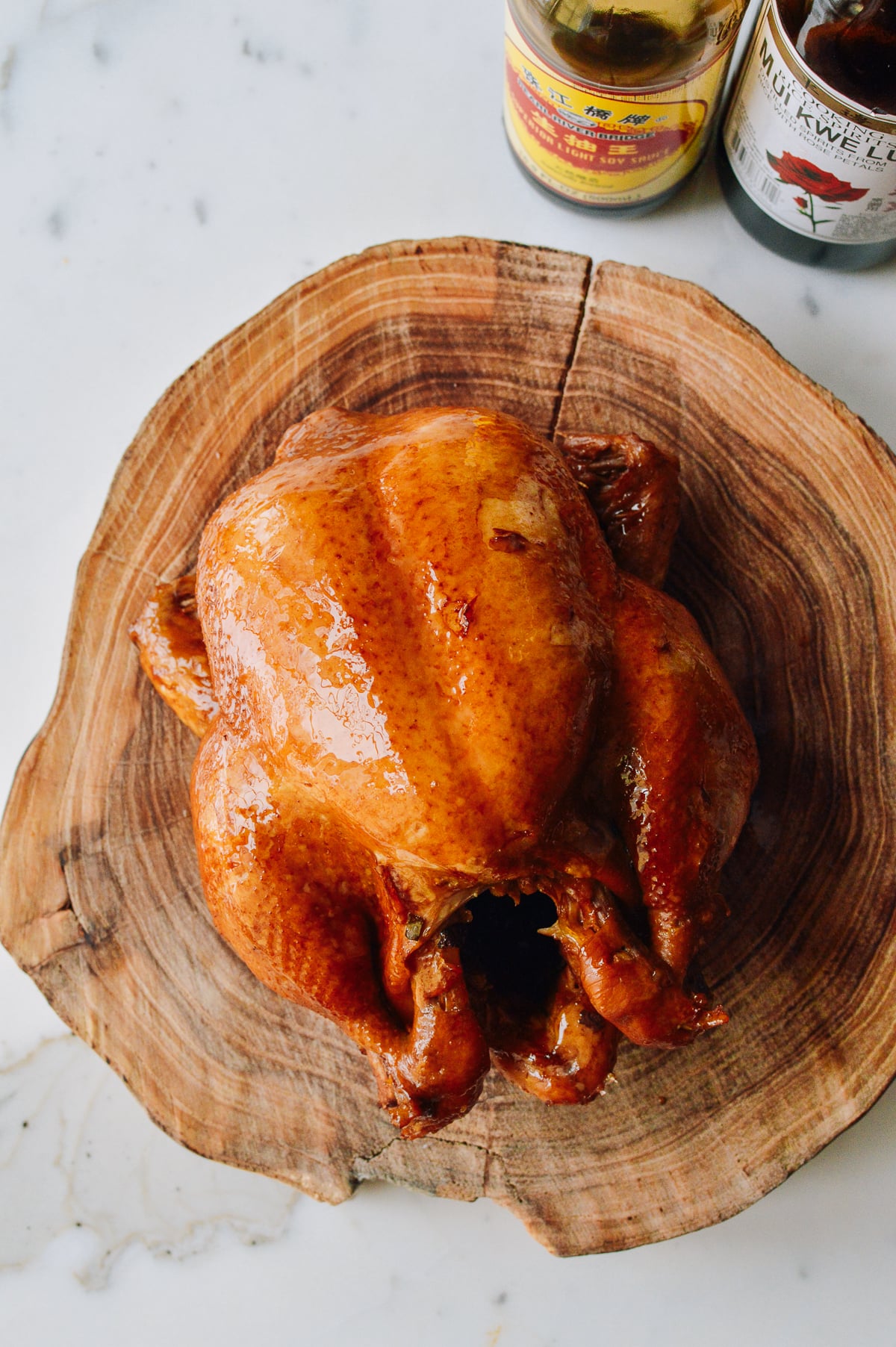
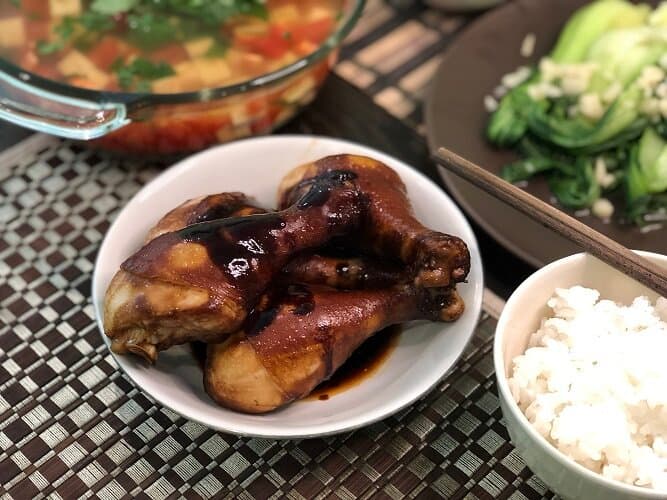
Soy Sauce Chicken is a poached whole chicken glazed in a fragrant broth of light and dark soy sauce, ginger, star anise, and Chinese rice wines—a signature Chinatown dish that's surprisingly simple to execute at home.
1 whole chicken ((about 4 pounds/1.8kg; preferably buddhist-style, never frozen))
1/4 cup salt
2 teaspoons neutral oil ((such as vegetable, canola, or avocado oil))
7 slices ginger
2 scallions ((cut into 3-inch/8cm pieces and smashed flat))
3 whole star anise
3/4 cup Chinese rose wine ((mei gui lu))
3/4 cup Shaoxing wine
2 cups light soy sauce
1/2 cup dark soy sauce
1 3/4 cups sugar
12 cups water
12 Ingredients
Delivery in as fast as one hour.*
Powered by
Prices vary by store
*Service fees apply. Instacart® and the Instacart logo are registered trademarks of Maplebear Inc. d/b/a Instacart.
Instructions
1
Take your chicken out of the refrigerator an hour before you plan to cook. Remove the giblets, and thoroughly rinse the chicken inside and out. If the skin looks rough or you still see patches of a thin, waxy yellow layer on top of the skin, use your salt to rub the chicken all over to clean it, reserving the salt.
2
Grab your stock pot. It will ideally be a tall, narrow pot that will just fit the chicken, since it should be totally submerged in the cooking liquid (if you use a larger pot, you'll need to increase all the ingredients proportionally to create more cooking liquid). Put it over medium low heat, and add the oil and ginger.
3
Let the ginger caramelize for about 30 seconds. Then add the scallions and cook another 30 seconds. Add the star anise, rose wine, and Shaoxing wine. Bring to a simmer to let some of the alcohol cook off. Add the light soy sauce, dark soy sauce, sugar, salt, and water. Bring to a simmer again and cook on low heat for another 20 minutes.
4
Increase the heat to bring the liquid to a slow boil (i.e. a little stronger than a simmer, but not a rolling boil). Use a large roasting fork inserted into the chicken cavity to lower the chicken slowly into the pot breast side up. Make sure any air pockets in the cavity fill up completely with liquid. The chicken should be entirely submerged at this point.
5
Once the chicken goes in, the cooking liquid will cool down. Let it cook for about 5 minutes at medium high heat. Next, use your large fork to carefully lift the chicken out of the water and empty the liquid inside the cavity, which will be cooler than the liquid surrounding the chicken. Lower the chicken back into the pot, making sure once again that there aren't any air pockets in the cavity. If the chicken is not completely submerged, periodically baste the exposed area with cooking liquid.
6
Bring the liquid back up to a lazy simmer, which should take about 5 minutes. Cover and keep it at this slow simmer (just below boiling - the liquid will be about 210°F/99°C) for 25 minutes. If the chicken (breast side up) is exposed and not submerged you can baste the chicken with the liquid a few times during this 25 minutes of cooking. You can also turn the chicken over (breast side down) at the halfway point (after 13 mins) and turn the chicken back over breast side up after the full 25 minutes.
7
Turn off the heat, keeping the pot covered, and let the chicken sit (breast side up) in the pot for another 25 minutes (slightly less time for a smaller chicken, slightly more time for a chicken larger than 4 pounds). Use a meat thermometer inserted into the thickest part of the thigh to confirm it's reached 165°F/74°C. It's good to check a couple of times in different places because you don't want to undercook or overcook the chicken. Transfer the chicken to a plate and let it rest for 10 to 15 minutes before cutting.
Was this recipe helpful?
Tips & Notes
Pro tips
Keep the whole chicken submerged throughout poaching by using a pot large enough to allow full submersion; a gentle simmer prevents tough, stringy meat.
Smash the scallions flat before adding to release aromatic oils and deepen the broth's flavor.
Reserve the poaching broth after cooking—it freezes well and becomes an umami-rich base for soups or rice.
Let the finished chicken rest in the warm broth for 5–10 minutes before serving to retain juices and allow flavors to set.
Substitutions
Shaoxing wine → dry sherry (similar sweetness, less complexity)
Mei gui lu → Chinese cooking wine or additional Shaoxing wine (loses floral notes but maintains alcohol function)
Storage & make-ahead
Store cooled chicken and broth together in an airtight container in the refrigerator for up to 3 days; reheat gently in the broth or serve chilled.
Common Questions
Can I use a frozen chicken?
The recipe specifies never-frozen chicken. Frozen birds release excess moisture and won't poach evenly; thaw completely before cooking, or substitute with fresh.
What's the difference between light and dark soy sauce?
Light soy sauce is saltier and thinner; dark soy sauce is aged longer, sweeter, and adds color and depth. Both are essential for authentic flavor balance.
How do I know when the chicken is done?
The thickest part of the thigh should reach 165°F (74°C) when measured with a meat thermometer, or juices should run clear when pierced.
Can I substitute the Chinese wines?
Mei gui lu (rose wine) and Shaoxing wine add distinct floral and umami notes. Dry sherry can approximate Shaoxing, but finding authentic versions is preferred.
How should I store leftovers?
Refrigerate the cooled chicken and broth in an airtight container for up to 3 days. Reheat gently in the broth or slice and serve cold.