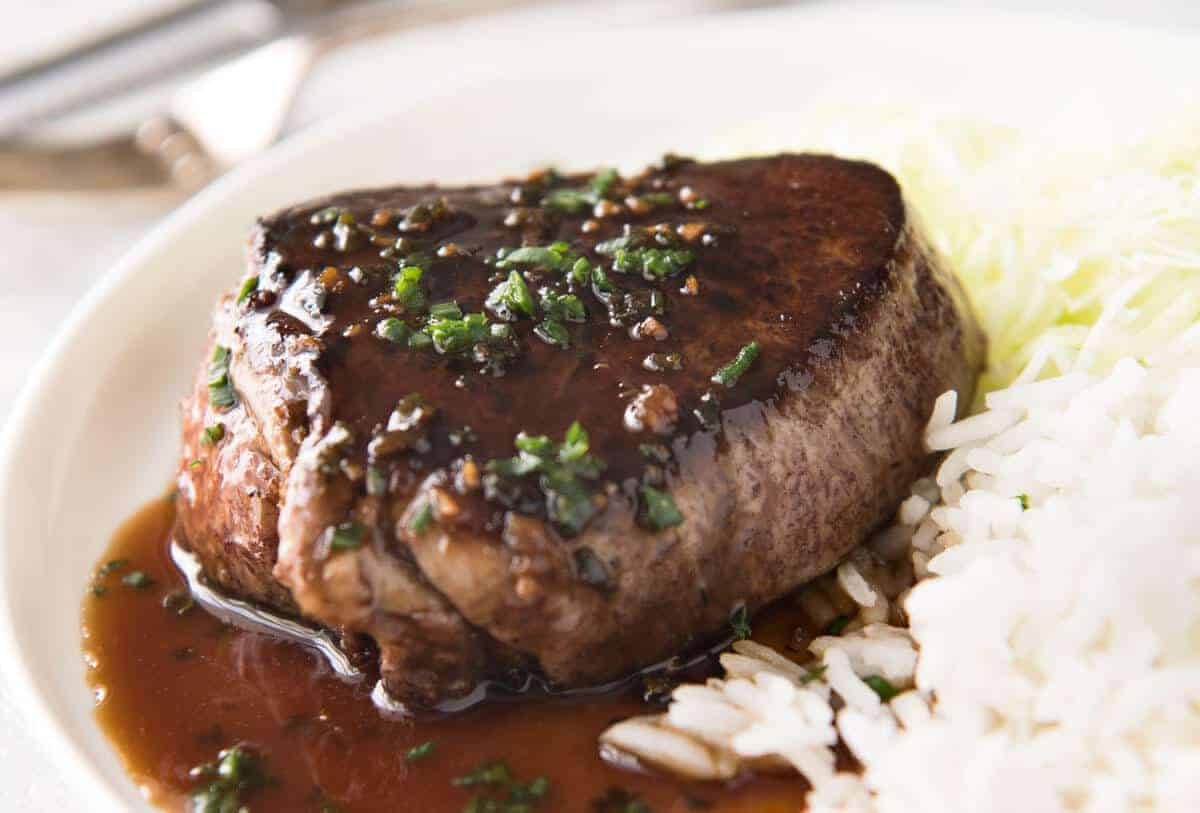
This Asian Steak pairs tender beef tenderloin with a glossy sauce of soy, mirin, sake, and brown butter — a simplified homage to Tetsuya's refined technique, ready in under 20 minutes.
2 beef tenderloin steaks, around 150g/5oz each (Note 1)
1 tbsp vegetable oil (or other neutral cooking oil)
1 tbsp soy sauce, all purpose (Note 2)
2 tbsp Mirin (Note 3)
3 tbsp cooking sake (Note 3)
45g/3tbsp unsalted butter
1 small garlic clove, minced
1/2 tsp ginger, minced (can exclude)
3 tsp shallots/scallions (green part) or chives, finely chopped
9 Ingredients
Delivery in as fast as one hour.*
Powered by
Prices vary by store
*Service fees apply. Instacart® and the Instacart logo are registered trademarks of Maplebear Inc. d/b/a Instacart.
Instructions
1
Take the steak out of the fridge 20 minutes prior to cooking (or 10 minutes if it's a stinking hot summer day).
2
Combine soy sauce, Mirin and sake in a small bowl.
3
Heat oil in a skillet over medium high heat until smoking. Add steak and cook to your liking. Mine were 150g/5oz each and 3cm/1.25" thick and I cooked it 3 minutes on the 1st side and 2 minutes on the second side for medium rare.
4
Transfer steak onto a plate and cover loosely with foil. Rest for 5 minutes.
5
Let the skillet cool down a bit then return to the stove over medium high heat. Add Sauce and bring to simmer, then add butter. When the butter melts and is incorporated into the sauce, immediately remove it from the stove.
6
Stir through garlic, ginger and 2 tsp of shallots (reserve rest for garnish), the sauce should be slightly thickened (if not, keep stirring, thickens more as it cools).
7
Place steak on plates and spoon over sauce. I served the steaks with finely shredded cabbage without dressing (very typical Japanese side) and white rice, plus some edamame on the side.
Was this recipe helpful?
Tips & Notes
Pro tips
Pat steaks dry before searing to develop a golden crust; moisture inhibits browning.
Rest the steaks for 2–3 minutes after cooking before saucing — this allows carryover cooking to finish and juices to redistribute.
Whisk butter into the warm sauce off-heat to prevent separation; add it in small cubes for a silky, emulsified finish.
Don't overcrowd the pan; sear steaks separately to avoid steam and ensure even browning.
Substitutions
Beef tenderloin → New York strip or ribeye (adjust cooking time; these cuts are thicker)
Soy sauce → tamari (gluten-free alternative; use 1:1)
Mirin → honey or agave (1 tbsp, though flavor will be less complex)
Shallots/scallions → fresh chives or a small sliced onion
Storage & make-ahead
Cooked steak and sauce are best eaten fresh but can be refrigerated separately for up to 2 days; reheat sauce gently and serve steak at room temperature or warmed briefly in the pan.
Common Questions
What cut of beef works best for this recipe?
Beef tenderloin (filet mignon) is ideal for its tenderness and buttery texture. Choose high-quality steaks around 150g/5oz each and cook to medium-rare for best results.
Can I substitute mirin or sake if I don't have them?
Mirin can be replaced with a mix of sugar and water (1:1 ratio). Sake is harder to replicate; white wine or vermouth works as a partial substitute but will change the flavor profile.
How do I know when the steak is cooked through?
Use a meat thermometer: 50–55°C (120–130°F) for medium-rare. Alternatively, touch the steak — it should feel soft with slight resistance when pressed at the center.
Can I make the sauce in advance?
Combine soy, mirin, and sake ahead of time, but add butter and aromatics just before serving to preserve the emulsion and fresh garlic flavor.
What should I serve with this steak?
Frozen rice (as mentioned in the recipe notes) reheats quickly and pairs perfectly. Steamed bok choy or a simple green salad also complement the rich sauce well.
Keep Cooking
Crispy Pork Belly
70 min
Asian Style Tuna Sashimi
10 min
Salmon Fried Rice
25 min
Thai Pomegranate Chicken Khao Soi Noodle Soup.
40 min
Vegan Khao Soi - my favorite Chiangmai's Noodle Soup