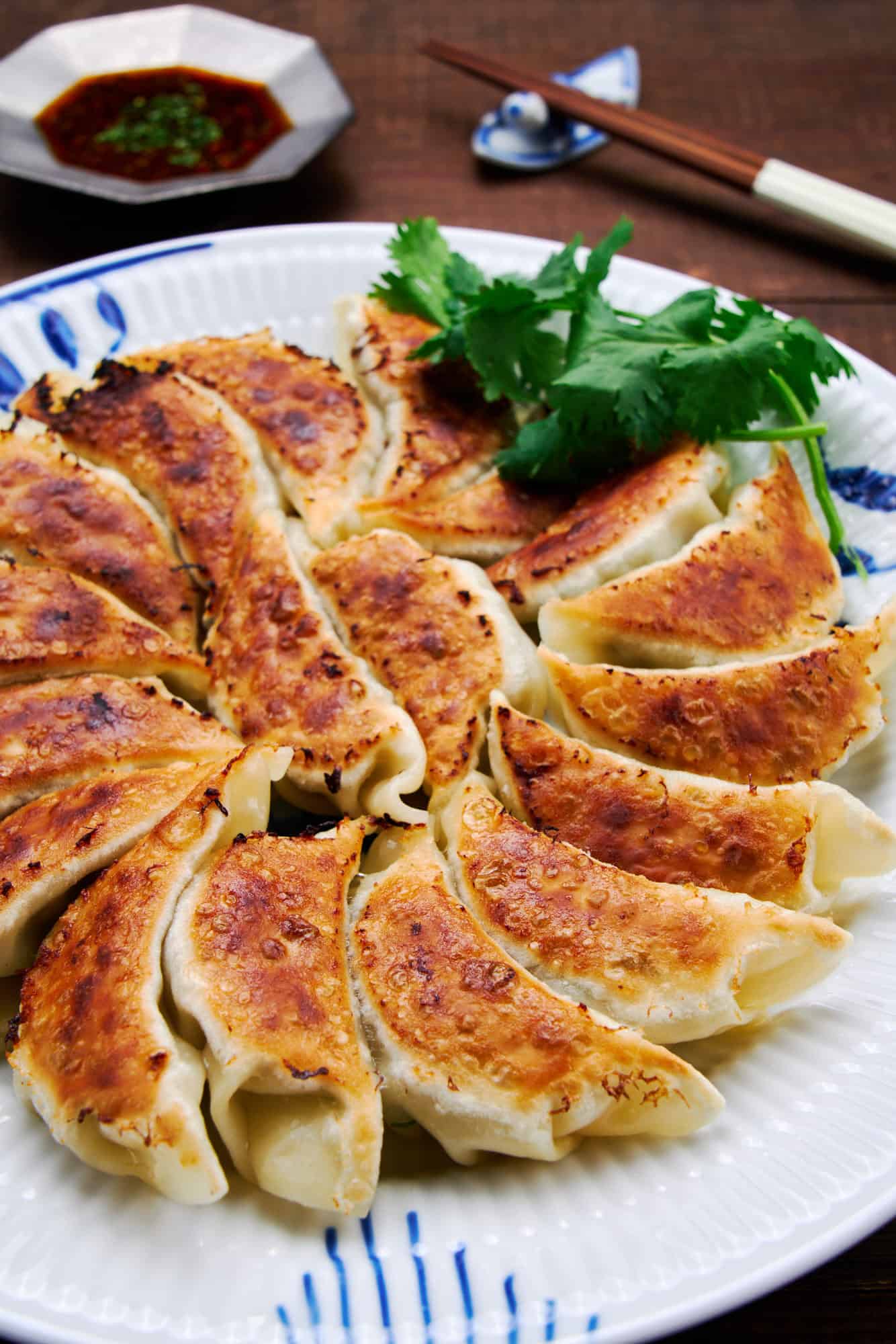
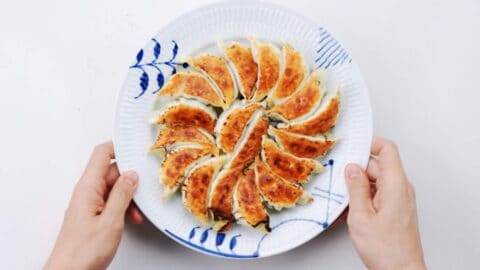
This pork gyoza features a juicy, umami-rich filling of ground pork, cabbage, garlic chives, and ginger balanced with oyster sauce and sesame oil, wrapped in thin wrappers and pan-fried until the bottoms turn golden and crisp. Refined over decades, it delivers restaurant-quality results at home.
*Service fees apply. Instacart® and the Instacart logo are registered trademarks of Maplebear Inc. d/b/a Instacart.
Instructions
1
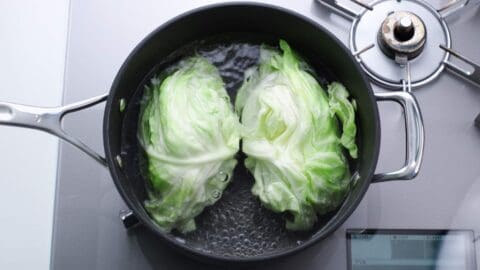
Find a pot that's large enough to hold both halves of 550 grams cabbage, and then fill it with 6 cups of water and 2 teaspoons of table salt. Bring the water to a boil, add the cabbage, and cover the pot with a lid.
2
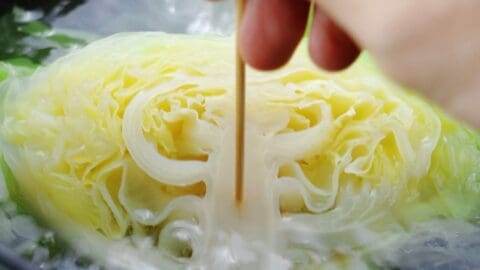
Cook the cabbage until it's tender enough for a skewer to easily pass through the thickest part of the stem (about 15 minutes). Then, use tongs to transfer the cabbage to a tray and let it cool enough to handle.
3
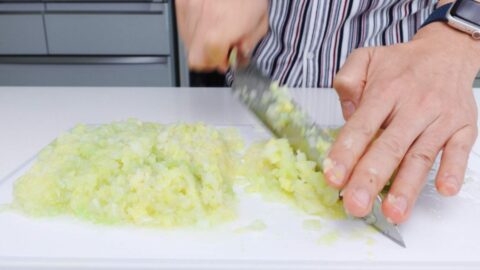
Once the cabbage has cooled a bit, it will still be juicy but do NOT squeeze it. Slice it up in one direction, then turn it 90 degrees and chop it up. Go back over it several times with your knife until the cabbage is minced into pieces that are no larger than 1/8-inch (3mm).
4
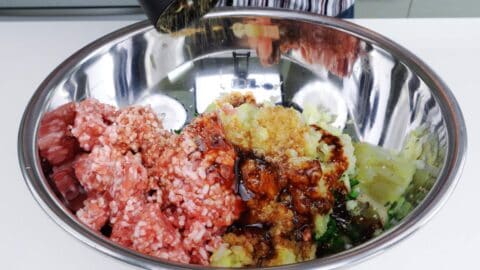
Transfer the minced cabbage and any accumulated juices on the cutting board to a large bowl. Add the 130 grams garlic chives, 350 grams ground pork, 30 grams ginger, 3 tablespoon oyster sauce, 1 1/2 tablespoon toasted sesame oil, 1 1/2 tablespoon soy sauce, and 1/4 teaspoon white pepper.
5
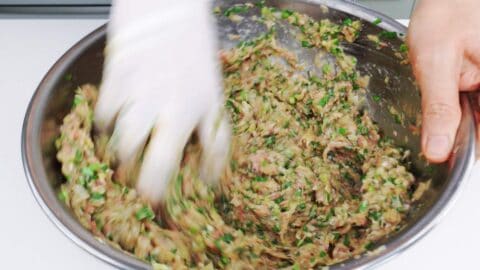
Use your hand to mix the gyoza filling ingredients together in a circular motion until the mixture is uniform and all sticks together. Ideally, you want to cover and let this rest in the fridge overnight, but you can continue if you are in a rush.
6
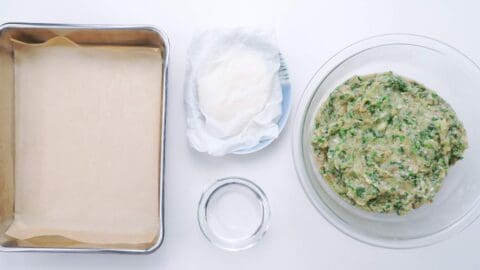
To wrap the gyoza, open your package of 80 gyoza wrappers and place them under a damp paper towel to keep them from drying out. Prepare a small bowl of water.
7
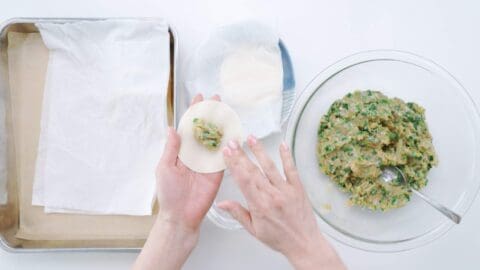
Place a gyoza wrapper on the palm of your non-dominant hand and then scoop about a tablespoon of gyoza filling into the center of the wrapper. Next, wet the fingers of your other hand and trace them around the edges of the wrapper to wet them.
8
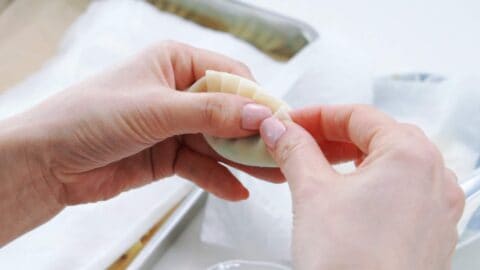
Fold the wrapper in half over the filling, and use the fingers of your dominant hand to fold pleats into the edge of the top half of the wrapper as you seal it shut. Repeat until you run out of filling, lining the dumplings up on a parchment paper lined tray. Be sure to keep them covered with a damp paper towel to keep them from drying out. Watch the video above for the full technique.
9
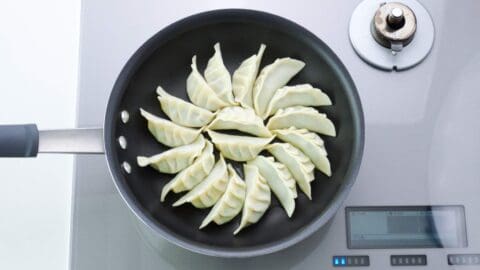
To cook the gyoza, heat a non-stick frying pan over medium-high heat and add 1 tablespoon of oil. Line the dumplings up in a circle around the edge of the pan. This should leave room for two more gyoza in the center. I usually fit eighteen to twenty gyoza into my 10-inch pan.
10
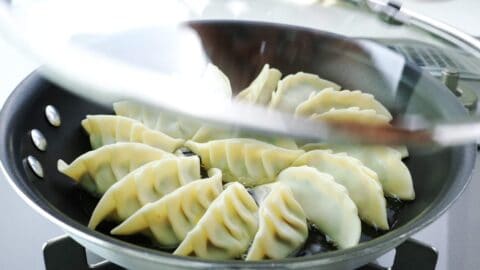
With a lid on standby, add 1/4 cup of water and immediately cover the pan with the lid. Once the water comes to a rolling boil, turn down the heat to maintain a gentle boil. Set the timer for 3 minutes.
11
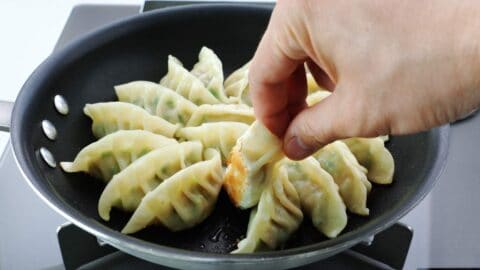
When the timer is up, remove the lid from the pan and turn up the heat to medium-high to burn off any remaining liquid and crisp the bottom of the potstickers. The gyoza are done when they are golden brown on the bottom.
12
Flip the gyoza out onto a plate so the browned side is facing up (be careful not to splash yourself with hot oil) and serve immediately with gyoza sauce.
Was this recipe helpful?
Tips & Notes
Pro tips
Chill the filling for 15–30 minutes before pleating; cold filling is easier to work with and stays sealed during cooking.
Use a gentle sear-steam method: start flat-side down in hot oil for 2–3 minutes until golden, then pour water around (not over) gyoza and immediately cover to trap steam and cook the tops through.
Test one gyoza from the batch first; if the wrapper splits during steaming, your heat was too high—lower it slightly for the rest.
Pat cabbage dry after chopping to prevent excess moisture that can make the filling weep and wrappers soggy.
Substitutions
Ground pork → ground chicken or shrimp (use 1:1 ratio; chicken will be slightly leaner and milder)
Garlic chives → scallions or Chinese chives (use the same amount; flavor will be slightly more onion-forward)
Oyster sauce → soy sauce or fish sauce (reduce to 2 teaspoon to avoid over-salting)
Toasted sesame oil → regular sesame oil (use half the amount, as it's more intense untoasted)
Storage & make-ahead
Store cooked gyoza in an airtight container in the fridge for up to 3 days; reheat in a skillet over medium heat with a splash of water and covered lid until warmed through, 3–4 minutes.
Common Questions
Can I make pork gyoza ahead of time?
Yes. Assemble gyoza and freeze on a tray before transferring to a bag; pan-fry directly from frozen, adding 1-2 minutes to cooking time.
How do I get the wrapper crispy on the bottom?
After pleating, place gyoza flat-side down in oil over medium-high heat until golden (2-3 minutes), then add water and cover to steam the top half through.
What's the purpose of toasted sesame oil in the filling?
It adds nutty depth and aromatic complexity that enhances the savory pork and umami from the oyster sauce and soy.
Can I boil or steam instead of pan-frying?
Yes, but you'll lose the signature crispy wrapper. For steamed gyoza, reduce the filling's sesame oil to 1 teaspoon and follow the same water-steaming method.
How finely should I chop the garlic chives?
Chop into pieces no larger than 1/4 inch so they distribute evenly and cook through during the filling's brief heating.