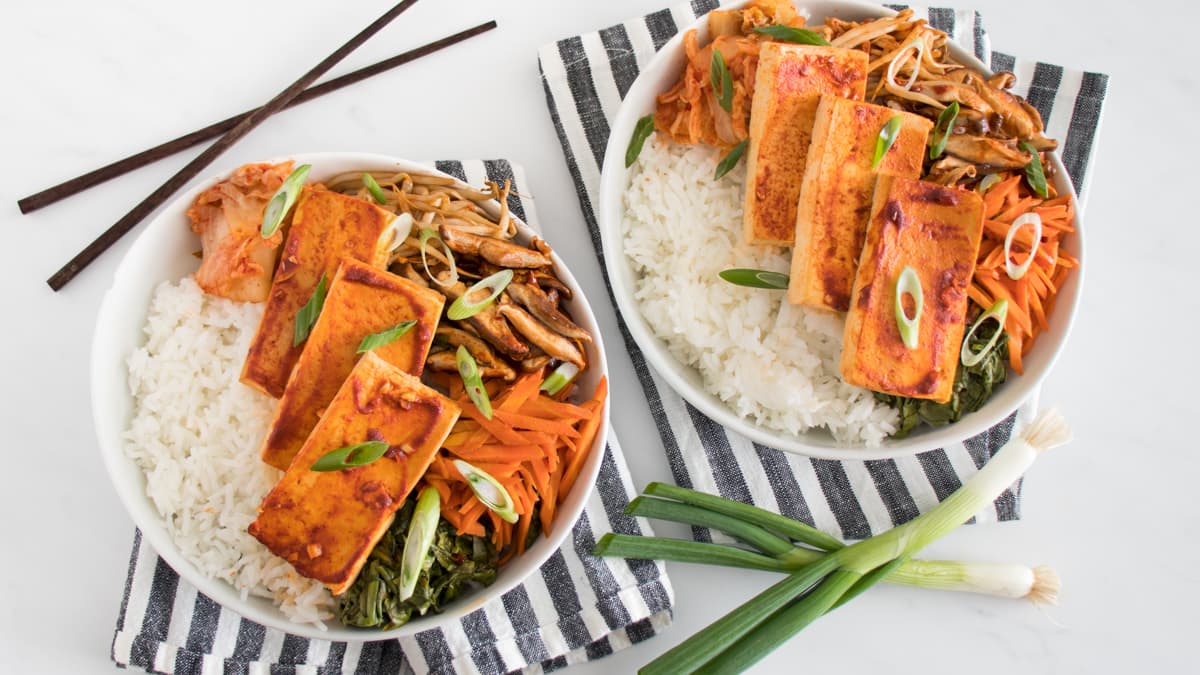
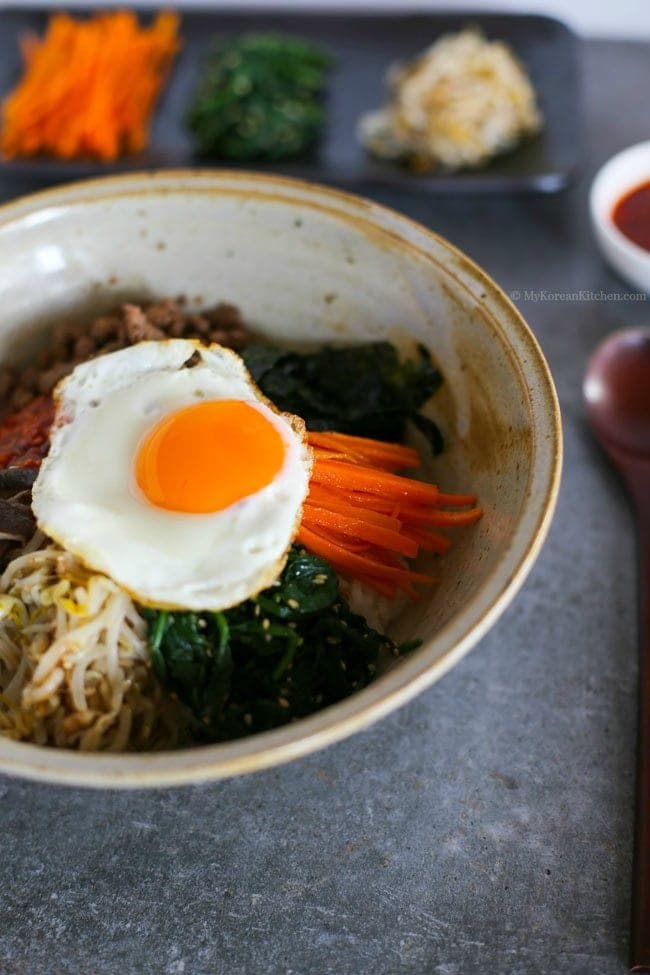
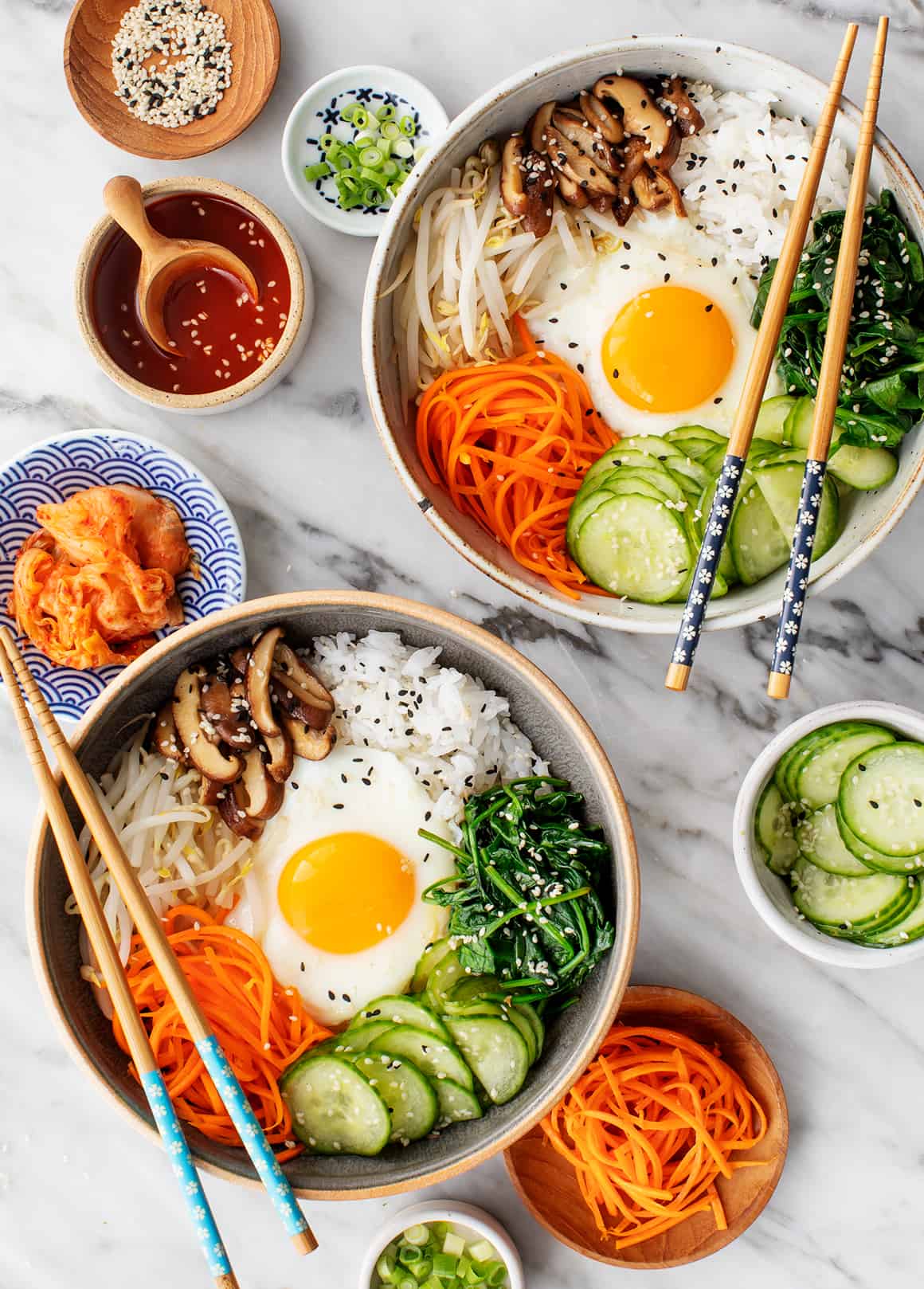
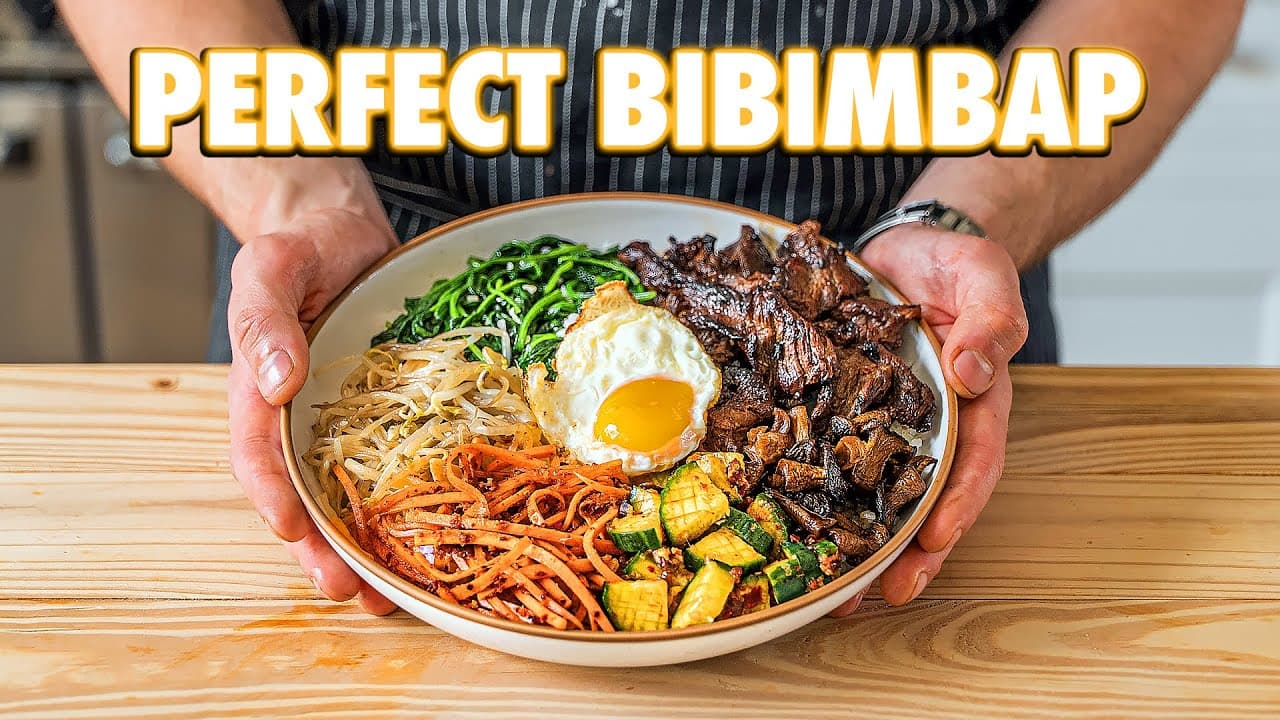
This easy bibimbap combines seasoned rice, fresh vegetables, and a homemade gochujang sauce in one customizable bowl. It's naturally gluten-free, requires only 10 ingredients, and the sauce can be made ahead for quick weeknight meals.
Check what you already have. We'll leave it off your shopping list.
13 Ingredients
CookOS may earn a commission from Instacart orders.
Powered by
Prices vary by store
*Service fees apply. Instacart® and the Instacart logo are registered trademarks of Maplebear Inc. d/b/a Instacart.
Instructions
1
Optional: If soaking rice, rinse, drain, and add to a mixing bowl and cover with cool water. Soak for 12 hours or overnight. For a quicker soak, cover in hot water for 1 hour. Then rinse and drain.
2
To a medium saucepan, add cooking water (if you soaked your rice, start with 1 ¼ cups water as recipe is written), rinsed rice, and salt. Heat over high heat and bring to a boil, reduce heat to simmer, and cover. Cook for 15-20 minutes or until water is absorbed and rice is tender and fluffy. Soaked rice generally takes less time to cook. Unsoaked rice can take up to 30 minutes or more. Keep covered and set aside.
3
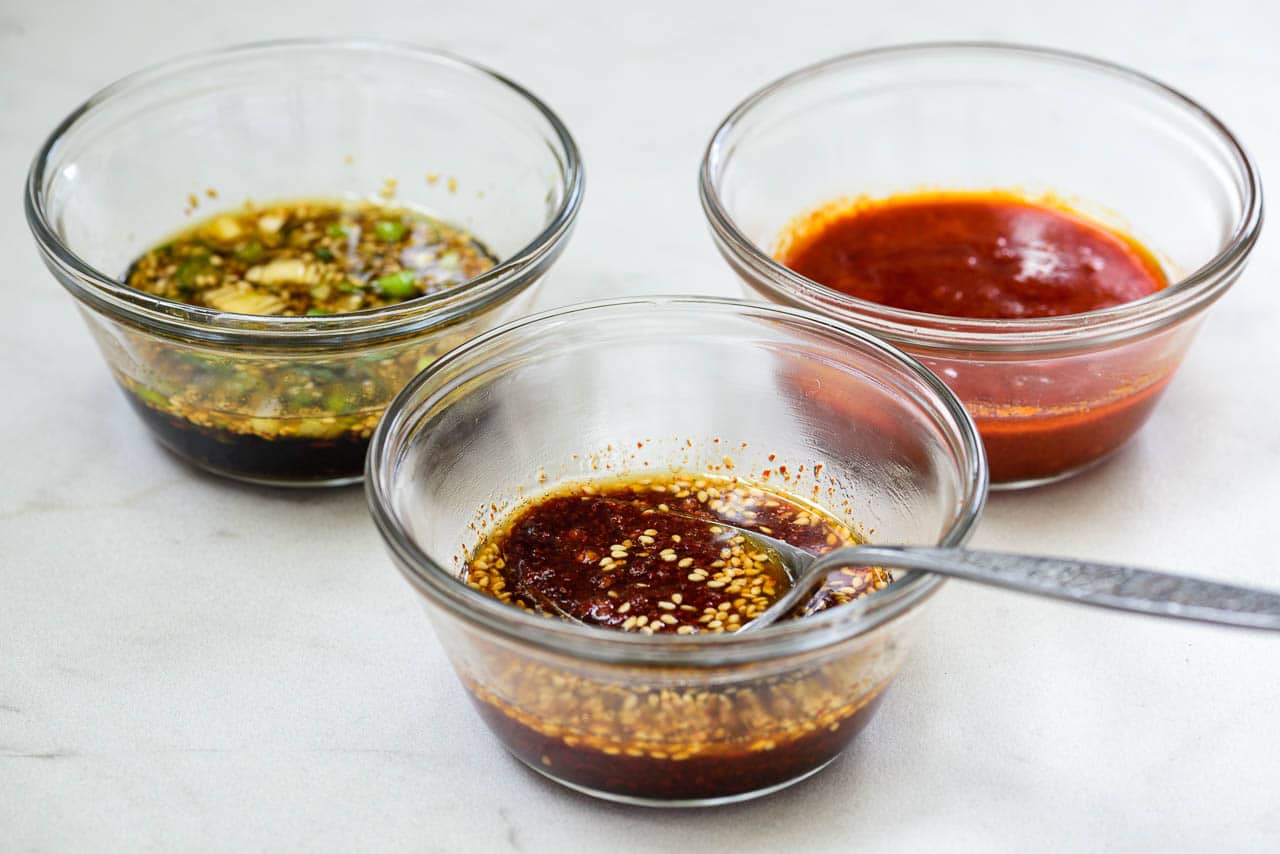
In the meantime, prepare Gochujang sauce. Skip if using store-bought.
4
While the rice finishes cooking, heat a large skillet over medium heat (stainless steel or cast iron are best). Once hot, add 1 tsp of sesame oil or enough to just coat the pan.
5
Once the oil is hot, add vegetables one type at a time and cook in batches until lightly browned (1-2 minutes), seasoning each with a little minced garlic and a dash of coconut aminos, tamari, or sea salt. Cooking in batches allows you to arrange vegetables separately over the rice for visual effect. We cooked the zucchini first, then carrots, green onion, bean sprouts, and spinach. Add more oil to the pan as needed between vegetables.
6
Arrange cooked vegetables in individual piles on a serving plate and cover gently to keep warm until serving.
7
To cook eggs (if vegan, see notes for options!), heat the same pan over medium heat. Once hot, add a little more oil (sesame or otherwise), and carefully crack eggs. For sunny-side up (our preference), cover briefly with a lid to steam for 1 minute, then remove lid and continue cooking until whites are cooked but yolks are still runny. Turn off heat and set aside (uncovered).
8
To serve, divide desired amount of rice between serving bowls (see notes for traditional dolsot recommendations and crispy rice hacks!) and top with portions of cooked veggies and egg.
9
Serve with 1-2 Tbsp Gochujang, kimchi (optional), and a dash of sesame seeds (optional). Bibimbap means “mixed rice,” so once your egg and Gochujang sauce are added, use a spoon or your chopsticks to stir everything together and mix the flavors. Then enjoy!
10
This dish is best fresh, but leftovers can be stored in the refrigerator up to 2 days and be reheated on the stovetop over medium heat as a stir fry. Not freezer-friendly.
Was this recipe helpful?
Tips & Notes
Pro tips
Toast sesame oil before adding if you prefer deeper nutty flavor, though untoasted works equally well.
Cook vegetables separately with minced garlic and coconut aminos to build flavor before assembling bowls.
Use a fried or soft egg with a runny yolk as the traditional topping—the warm yolk coats the rice when stirred together.
Prepare gochujang sauce in advance and store refrigerated up to one week to streamline future meal prep.
Substitutions
Coconut aminos → tamari or low-sodium soy sauce (note: soy sauce is not gluten-free)
Mixed vegetables → any seasonal vegetables, thinly sliced or shredded
Bean sprouts → additional mixed vegetables if unavailable
Short-grain rice → medium-grain rice (cooking time may vary slightly)
Storage & make-ahead
Store assembled bowl covered in the refrigerator for up to 2 days; reheat gently in a microwave or on stovetop and add a fresh fried egg before serving.
Common Questions
Can I make the gochujang sauce ahead of time?
Yes, the sauce can be prepared ahead and stored in an airtight container in the refrigerator for up to one week, making future preparations faster.
What vegetables work best for bibimbap?
Finely shredded carrots, thinly sliced zucchini, and spinach are ideal, but you can customize based on season and availability. Bean sprouts are traditional but mixed vegetables can substitute if unavailable.
Is this recipe truly gluten-free?
Yes, when using tamari or coconut aminos instead of regular soy sauce (which contains gluten), this recipe is naturally gluten-free.
Can I soak the rice overnight?
Yes, soaking rice for 12-24 hours speeds cooking time. If soaked, reduce water by about 1/4 cup (60 ml) as written.
How do I know when the rice is done?
Rice is done when all water is absorbed and grains are tender. Bring to a boil, then simmer covered until liquid is gone, approximately 15-20 minutes for unsoaked rice.