How to Clean and Season a Wok
Proper wok cleaning and seasoning preserves the non-stick patina and prevents rust, extending your cookware's lifespan. This guide demonstrates the simple hot-water and oil method used by professional cooks.
Proper wok cleaning and seasoning preserves the non-stick patina and prevents rust, extending your cookware's lifespan. This guide demonstrates the simple hot-water and oil method used by professional cooks.
Check what you already have. We'll leave it off your shopping list.
CookOS may earn a commission from Instacart orders.

Prices vary by store
*Service fees apply. Instacart® and the Instacart logo are registered trademarks of Maplebear Inc. d/b/a Instacart.
Rinse the dirty wok with very hot water in the sink. Do not use soap.
For any stubborn burnt-on bits, use a chainmail scrubber or similar abrasive tool to scrub the inside of the wok while rinsing.
Continue rinsing with hot water until the wok is completely clean.
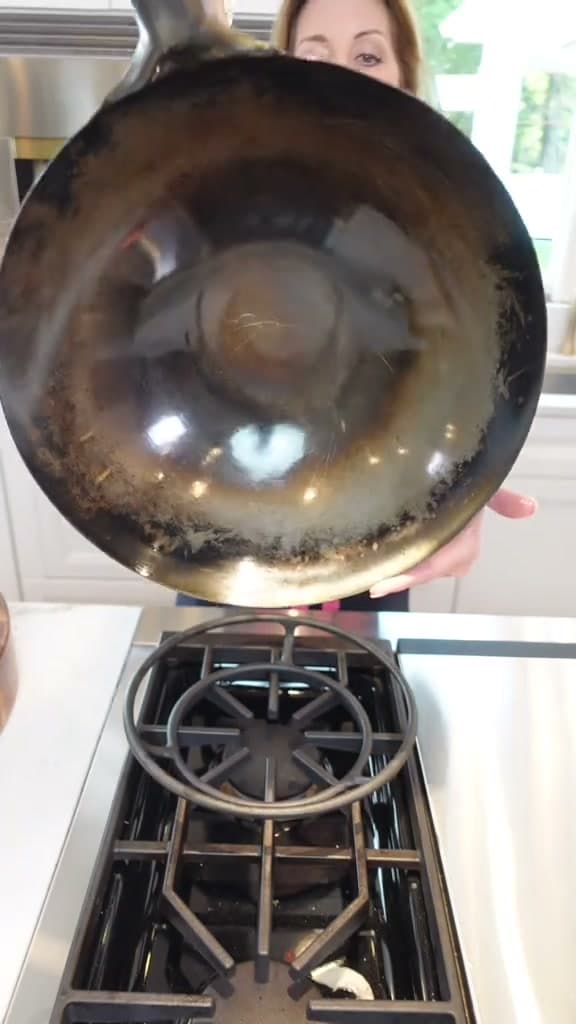
Place the wet wok on a stovetop over high heat to completely evaporate all the water and dry the pan. This will take a couple of minutes.
Once the wok is completely dry, turn off the heat and let it cool down slightly.
Add a small amount of avocado oil to the warm wok.
Using a paper towel, wipe the oil all over the inside surface of the wok to create a thin, even coating.
For storage, place a clean paper towel inside the wok to absorb any residual moisture and prevent rust.
Store your wok in a dry place after seasoning. Woks do not require refrigeration and maintain their seasoned surface indefinitely with proper post-use care.
wok
Season your wok after each use or at least weekly, depending on how frequently you cook with it. Regular seasoning maintains the non-stick surface and prevents rust.
Avoid harsh soaps that strip the seasoning layer. Use hot water with minimal soap, then immediately dry and re-oil to protect the surface.
Avocado oil works well due to its high smoke point. Other options include vegetable oil, canola oil, or peanut oil—choose based on your cooking preference.
Rust develops when the wok is not dried completely or left wet for extended periods. Always dry thoroughly with heat and apply a thin oil coating immediately after cleaning.
Yes. New woks often have a protective factory coating that should be removed and replaced with a proper seasoning layer before cooking.