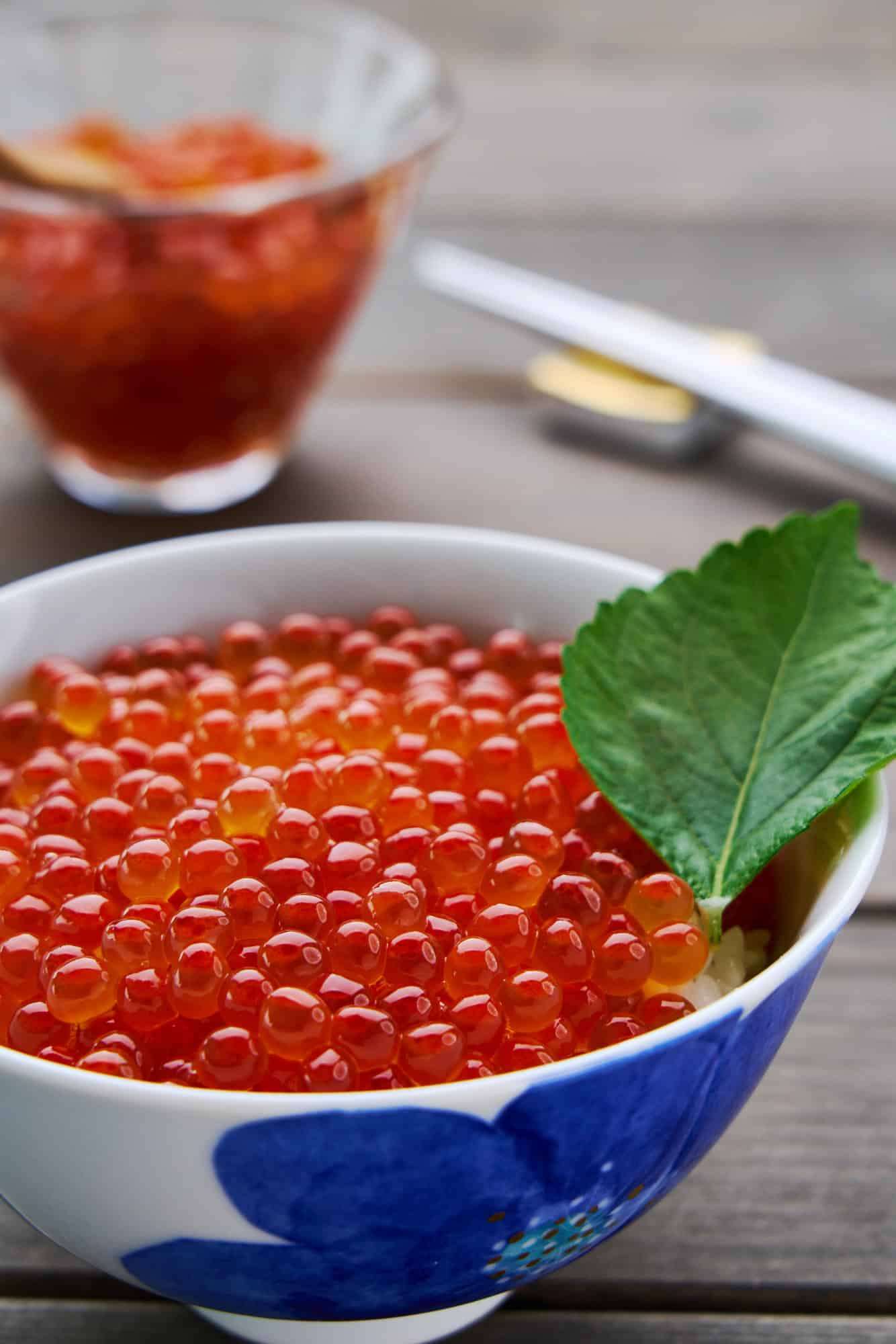
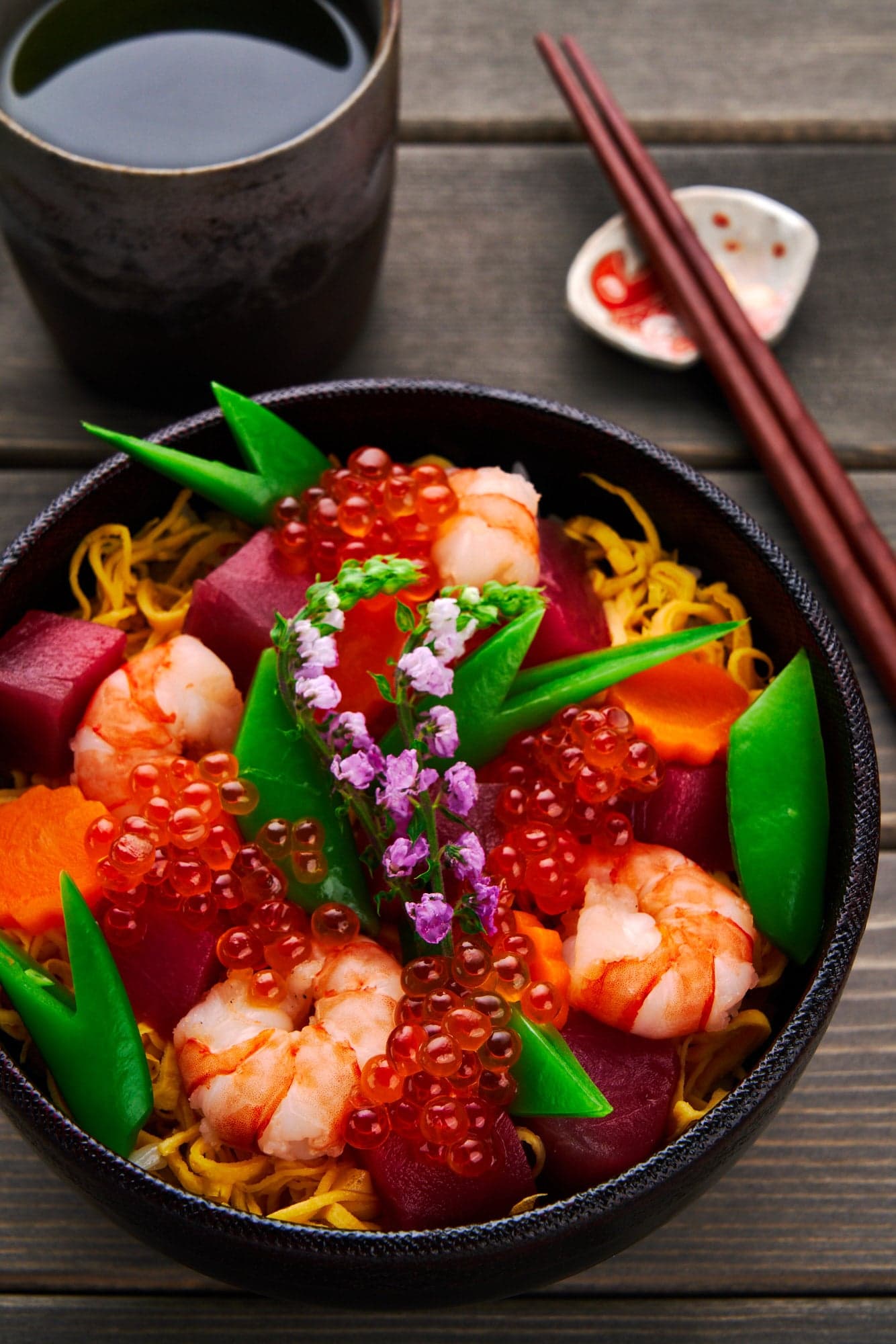
Homemade ikura is cured salmon roe transformed with a simple sake-and-soy brine into glistening, restaurant-quality gems perfect for sushi bowls and nigiri. The key is gentle handling of whole skein and precise brining time to preserve the delicate pop of each egg.
*Service fees apply. Instacart® and the Instacart logo are registered trademarks of Maplebear Inc. d/b/a Instacart.
Instructions
1
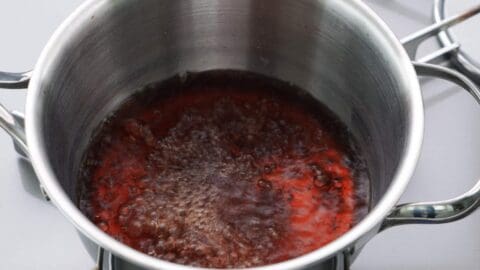
Add 3/4 cup sake, 2 teaspoons sugar, 1 1/2 teaspoons salt, and 1 tablespoon dashi soy sauce to a pot and bring the mixture to a rolling boil. Boil the brine until it no longer smells like alcohol (around 2 minutes).
2
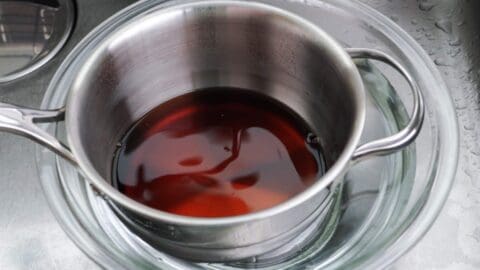
Place the pot in a bowl of cold water to chill the brine (you may need to change the water a few times).
3
To separate 350 grams salmon roe from the skein, split it open lengthwise down the middle with your fingers.
4
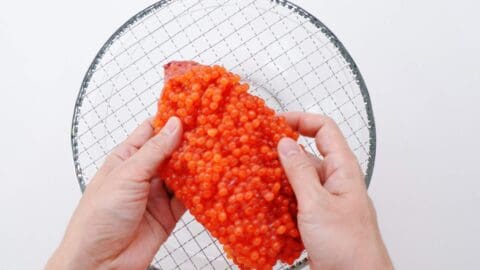
Set a mesh grill or cooling rack with 1/3-inch (1-centimeter) holes over a bowl and then rub the split side of the salmon roe skein over the holes to separate the individual eggs. Continue until you've separated most of the eggs.
5
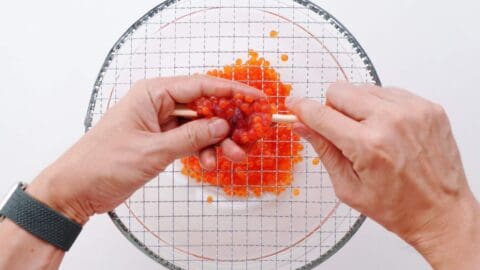
To get the last bit of salmon roe out of the roe sack, you can sandwich the skein between two disposable chopsticks and roll it up using your fingers to press out the salmon eggs.
6
I recommend picking through the roe and removing any bits of skein still stuck to it.
7
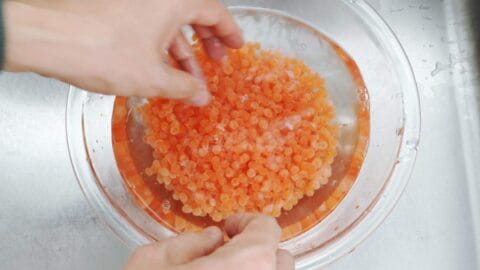
Wash the roe in several changes of cold water until the water runs clear, and pick any popped eggs or bits of skein out.
8
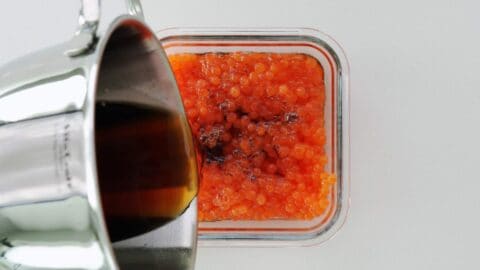
Drain the salmon eggs well in a non-reactive strainer (plastic or stainless steel), then put them in a non-reactive container (preferably glass). Cover with the chilled brine and stir to combine. Cover and refrigerate overnight.
9
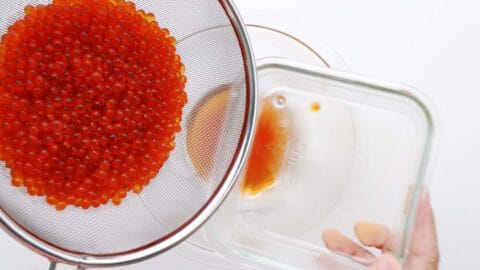
After 12 hours (or up to 24 hours), drain the ikura in a non-reactive strainer. Eat or freeze the ikura within three days.
Was this recipe helpful?
Tips & Notes
Pro tips
Use whole salmon skein and separate eggs gently under cool running water to minimize breakage—broken eggs lose their defining pop and visual appeal.
Chill all brine ingredients and equipment before mixing; cold temperatures keep the roe firm and prevent premature softening during the cure.
Taste the brine before adding roe; the salt-to-sugar ratio should be balanced—too much salt toughens the eggs, too little leaves them bland.
Don't stir the ikura while curing; let it rest undisturbed in the refrigerator to maintain uniform flavor and prevent eggs from cracking.
Substitutions
Sake → mirin (use same amount; adds sweetness, requires no additional sugar adjustment)
Dashi soy sauce → regular soy sauce (reduce to 1 teaspoon to prevent over-salting)
Storage & make-ahead
Store cured ikura in the refrigerator in its brine for 5–7 days, or freeze in an airtight container for up to 3 months.
Equipment
fine mesh strainer or slotted spoon · glass or non-reactive bowl · measuring spoons and cups · refrigerator at 32–40°F
Common Questions
How long does homemade ikura need to cure?
Ikura typically cures for 12–24 hours in the brine. At 12 hours it's lightly seasoned; at 24 hours the flavor deepens. Don't exceed 48 hours or the roe will become too soft.
Can I use soy sauce instead of dashi soy sauce?
Dashi soy sauce is preferred because it's slightly sweeter and less intense, but regular soy sauce works in a pinch—reduce the amount by ¼ teaspoon to avoid over-salting.
What temperature should I keep the ikura at while curing?
Store the brine and ikura in the refrigerator at 32–40°F (0–4°C) throughout curing. Cold temperature prevents bacterial growth and keeps the roe firm.
How do I separate the roe from the skein without breaking eggs?
Gently rub the whole skein under cool running water with your fingertips, allowing eggs to roll free while the membrane stays intact. Work slowly to minimize rupture.
How long does finished ikura keep?
Refrigerated in its curing liquid, homemade ikura lasts 5–7 days. For longer storage, freeze in airtight containers for up to 3 months, though texture softens slightly upon thawing.