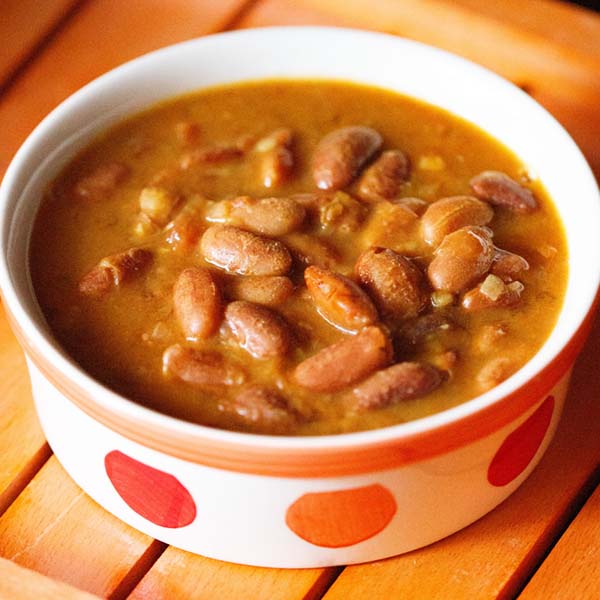
Rajma Chawal Recipe (Easy One Pot)
Rajma Chawal is a North Indian comfort dish pairing a thickened kidney bean curry with basmati rice, made in one pot using a pressure cooker for tender beans in 18-20 whistles.
Total
10hServings
4Rajma Chawal is a North Indian comfort dish pairing a thickened kidney bean curry with basmati rice, made in one pot using a pressure cooker for tender beans in 18-20 whistles.
Check what you already have. We'll leave it off your shopping list.
CookOS may earn a commission from Instacart orders.

Prices vary by store
*Service fees apply. Instacart® and the Instacart logo are registered trademarks of Maplebear Inc. d/b/a Instacart.
Rinse the kidney beans for a couple of times in running water.
Then soak the beans in enough water overnight or for 8 to 9 hours.
The next day or after 8 to 9 hours, drain the soaked water.
Rinse the beans again in fresh clean water. Drain all the water and keep the soaked beans aside.
Chop the veggies - onion, tomatoes, ginger, garlic and green chilies. Set aside.
In a pressure cooker add the kidney beans along with the chopped onions, tomatoes, ginger, garlic and green chilies
Now add the spices - cumin seeds, red chili powder, turmeric powder and salt.
Pour water. Stir and mix very well.
Add butter or oil. Stir again.
Cover and seal tightly with lid and pressure cook for 18 to 20 whistles on a high heat.
Once the pressure drop naturally in the cooker, then only open the lid and check the beans. The kidney beans have to be cooked completely.
Taste a few kidney beans and they should be melt in the mouth without giving you any bite or resistance while eating.
If the beans are still not cooked completely, then add about ½ cup more of water and pressure cook again for 5 to 6 whistles.
Once the beans are cooked well, then check the gravy also, you will see a thin water-like stock with the tomatoes and onions floating.
So you have to continue to simmer till the gravy thickens a bit.
Keep the cooker on stovetop and on a medium-low to medium heat, simmer without lid. Stir at intervals.
When you keep the rajma curry on the stovetop, then add the dry mango powder garam masala powder.
Stir well and simmer the curry till the consistency thickens. Mash a few kidney beans with the back of a spoon to thicken the consistency.
When the consistency of the gravy is no longer broth-like or water-like and thickened. Then the rajma curry is ready.
If you want you can thicken the gravy more if having with chapati or phulka or roti.
Lastly check the taste and add more of salt, garam masala, red chili powder or dry mango powder if required.
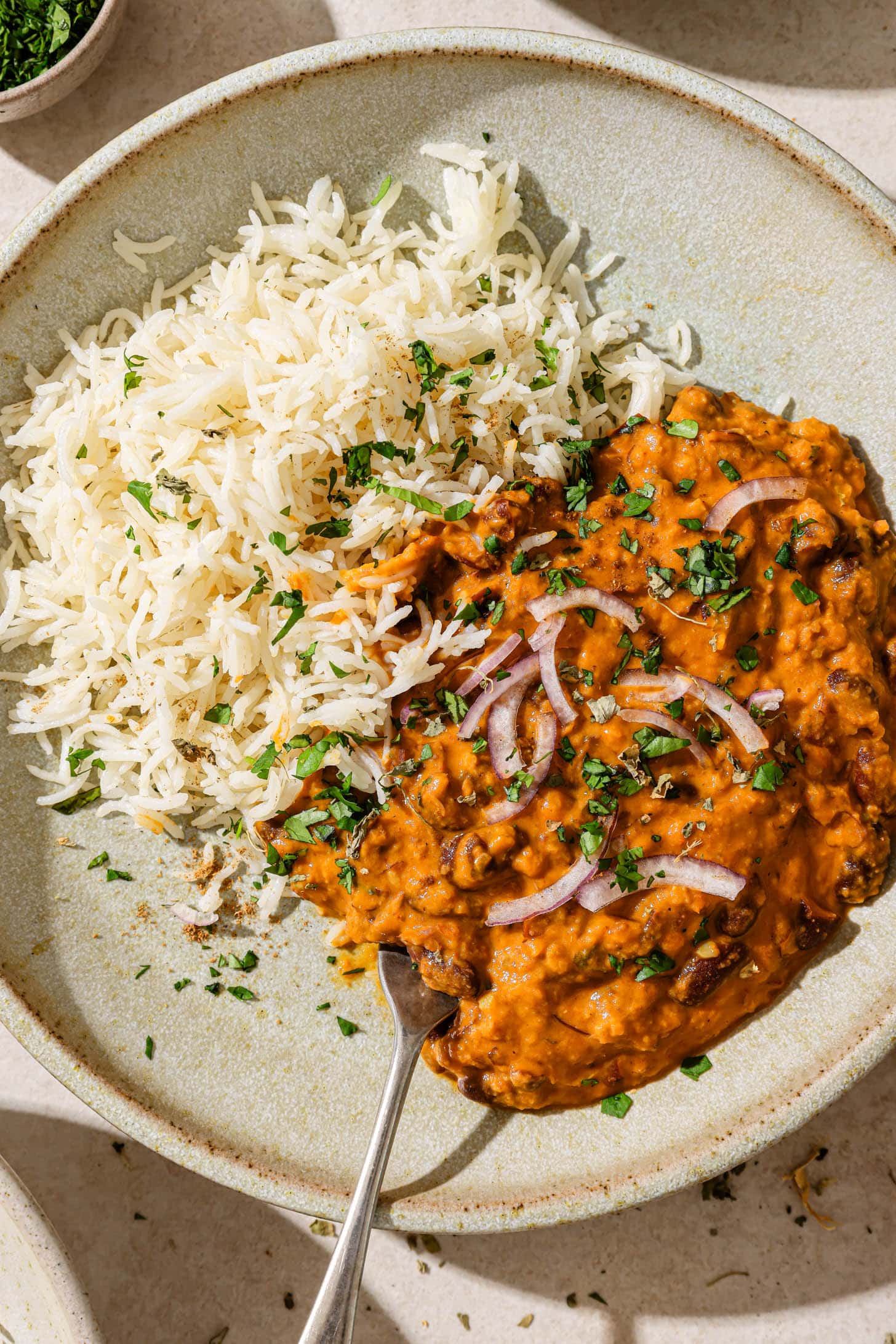
Garnishing with coriander leaves is optional. Serve rajma with some steamed rice or with chapati, paratha or naan. You can also serve with cumin rice or saffron rice.
Although you can serve rajma with any medium or short-grain variety of rice but it tastes best with basmati rice.
Take the amount of rice that you plan to serve. I have taken 1 cup heaped basmati rice (200 grams).
Take the rice in a bowl and begin to rinse the rice grains in running water till the water is clear of starch
Soak the rice grains in ¾ to 1 cup water for 20 to 30 minutes. After keeping the kidney beans to cook in the pressure cooker, you can begin with the rinsing and soaking of rice.
Later drain all the water from the rice and set aside
For 1 cup of rice, pour 2 cups water (500 ml) in a heavy thick deep bottomed pan. Use the proportion of 1:2 of rice and water depending on the quantity of rice you are using. Also, use a wide deep pan so that the water does spill out while cooking.
Note that the amount of water to be added depends on the quality and quantity of rice. Sometimes some strains of basmati rice get cooked quickly in less water. In this case, you can add 1½ to 1¾ cups of water for 1 cup of rice.
Add ¼ teaspoon salt or as per your taste. You can also add ½ teaspoon oil or butter or ghee. Adding any fat like oil or butter is optional.
Let the water come to a boil on a medium to medium-high heat.
Then add the rice and gently stir with a fork.
Cover the pan with a tight-fitting lid. Do check once or twice when the rice is cooking.
In case the rice grains look undercooked and the water has dried up, then add 2 to 3 tablespoons hot water. Stir gently with a fork then lower the flame and cook the rice till all the water has been absorbed and the rice grains have cooked well.
Usually, rice takes about 7 to 8 minutes for the rice grains to be tender, soft and fluffy. However keep in mind that the cooking time will vary with the type or variety of rice grains, quality of the pan and the intensity of the heat.
After the rice is cooked give a resting time of 5 minutes before you open the lid. Then open the lid and gently fluff the rice with a fork. For a detailed step by step method of making basmati rice you can check this post - How to cook basmati rice in a pot or pan.
While serving, spoon the rice in a serving plate. Pour the rajma gravy on top of the rice. Serve with a side of some chopped lemons, sliced onions and/or chopped tomatoes. Enjoy Rajma Chawal.
Store cooked rajma in an airtight container in the refrigerator for 3-4 days. Reheat on stovetop over medium heat, adding water if needed to loosen thickened gravy. Rice should be consumed within 1-2 days and reheated gently to avoid drying.
pressure cooker · heavy thick deep-bottomed pan (for rice)
Pressure cook for 18 to 20 whistles on high heat. If beans are still not tender, add ½ cup water and cook for 5 to 6 more whistles.
Soaking for 8-9 hours is important for even cooking and reducing cooking time. Skipping risks unevenly cooked beans.
Use 1:2 ratio (1 cup rice to 2 cups water). For some basmati strains, 1½ to 1¾ cups water may be sufficient; adjust based on rice quality.
Beans should be melt-in-mouth tender with no bite. Gravy should thicken from broth-like to a cohesive consistency; mash a few beans to help thicken.
Yes. Refrigerate cooked rajma in an airtight container for up to 3-4 days. Reheat on stovetop over medium heat, adding water if needed to restore consistency.