Small-Batch Kimchi
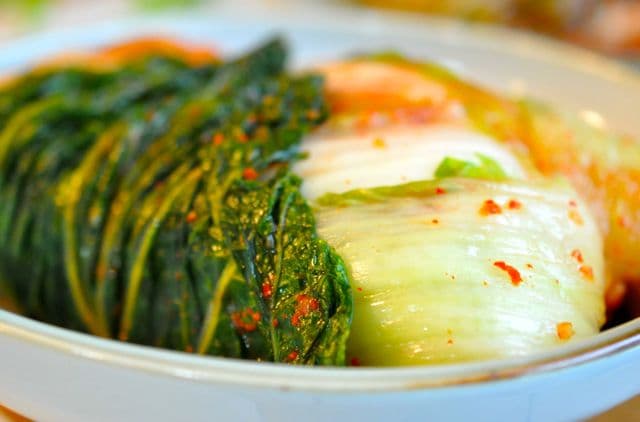
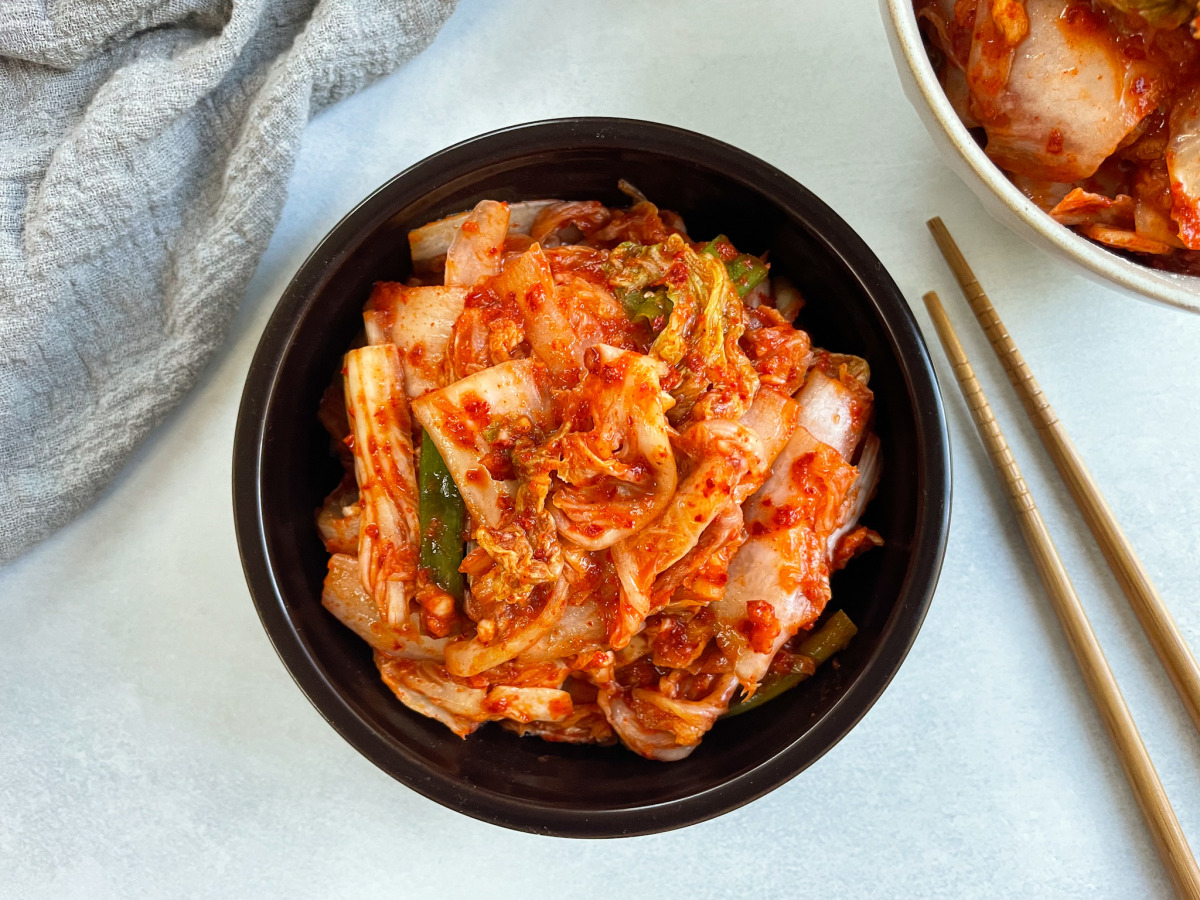
This small-batch kimchi recipe uses brined napa cabbage coated with a spicy gochugaru paste and ferments in 1–2 days at room temperature. It delivers authentic Korean flavor without special equipment or large quantities.
This small-batch kimchi recipe uses brined napa cabbage coated with a spicy gochugaru paste and ferments in 1–2 days at room temperature. It delivers authentic Korean flavor without special equipment or large quantities.
Check what you already have. We'll leave it off your shopping list.
CookOS may earn a commission from Instacart orders.

Prices vary by store
*Service fees apply. Instacart® and the Instacart logo are registered trademarks of Maplebear Inc. d/b/a Instacart.
Slice the napa cabbage in half lengthwise using a sharp knife. Then, score each half lengthwise again, cutting halfway through, and use your hands to pull it apart (making four sections total). Trim out damaged parts as needed.
Trim away the core portions and slice cabbage into smaller pieces, about 2-inches. Put the cabbage in a large mixing bowl.
In a small bowl, combine 1/4 cup coarse sea salt and 1 cup water. Stir until dissolved. Measure and set aside 1/3 cup coarse sea salt.
Pour the salted water into the bowl with the cabbage. Next, sprinkle the reserved salt all over the cabbage. Use your hands to spread salt evenly. Wear gloves as needed, salt may sting sensitive skin. Cover with plastic wrap and set aside for 1 hour.
Uncover, toss and flip cabbage leaves, and cover again. Let them brine for another hour.
Into a small bowl, combine rice flour and hot water, pouring hot water a little at a time while stirring until smooth. Set aside to cool. This paste will provide moisture for the spicy sauce and help speed up the fermentation.
Make spicy paste by combining minced garlic, gochugaru, anchovy extract, plum syrup and sugar in a medium size bowl. Add in cooled rice paste and stir well until well combined. Taste and adjust for heat, adding more gochugaru if desired. Lastly, finely chop the green onions and add them inches.
Wash brined cabbage three times and set in a strainer for 10-15 minutes to let the excess water drain. This step is important! If you don’t wash the cabbage properly, you will have a very salty kimchi. The white cabbage parts will be less salty then the green leafy parts—that’s normal.
In a large bowl, combine drained cabbage and spicy paste mixture. Using a glove, work the paste into the cabbage until the paste has been well incorporated. This will help with even flavoring and fermentation.
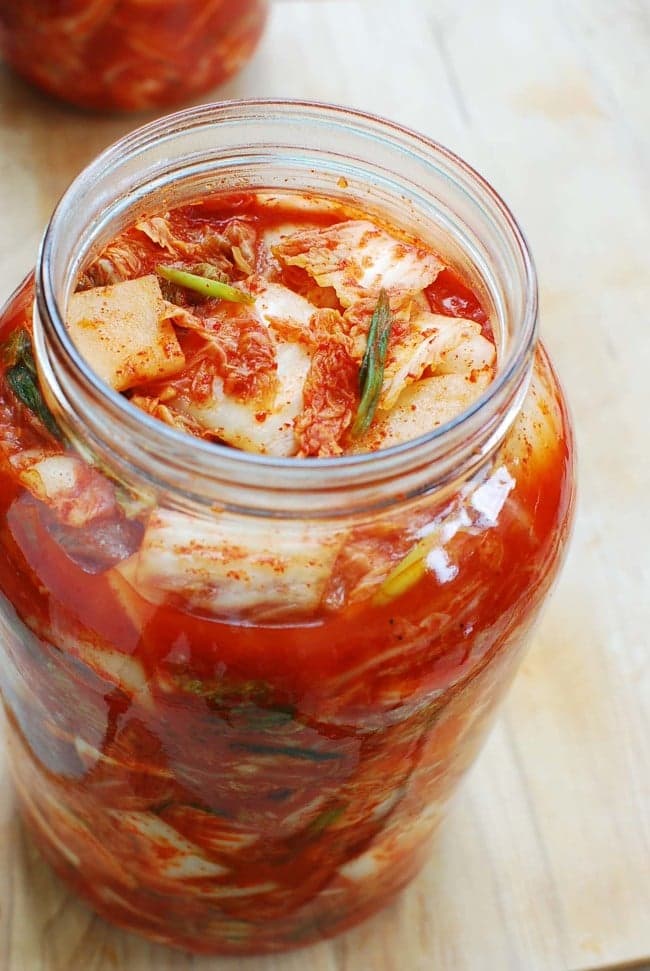
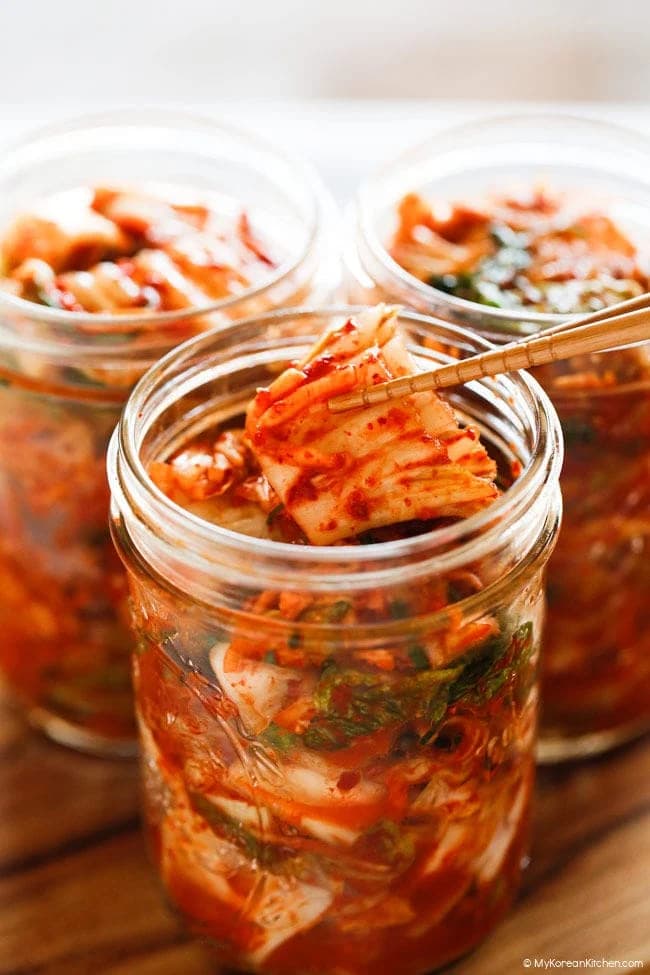
Stuff kimchi into a clean glass jar. Press down firmly to remove any air. Leave some room at the top of the jar to prevent spillage.
Leave the jar at room temperature overnight or for 1-2 days. Enjoy your fresh kimchi and store it in the fridge.
Store finished kimchi in an airtight glass jar in the fridge for up to 2–3 months; it continues to ferment and becomes more sour over time.
glass jar · food-grade gloves
Leave the jar at room temperature overnight or for 1–2 days, then move to the fridge for storage and continued gentle fermentation.
Washing removes excess salt accumulated during the 2-hour brine. Skip this step and your kimchi will taste overly salty. The white parts will naturally be less salty than the green leafy parts.
Regular red pepper flakes work but lack gochugaru's fruity, smoky depth. Gochugaru gives kimchi its signature flavor; substitution will taste noticeably different.
Use fish sauce (1–2 teaspoons) or soy sauce (2 tablespoons) for umami depth. Anchovy extract is traditional; substitutions shift the flavor profile.
Store in an airtight glass jar in the fridge for up to 2–3 months. It continues to ferment slowly and becomes more sour over time.