Stir-fried Shin Ramyun
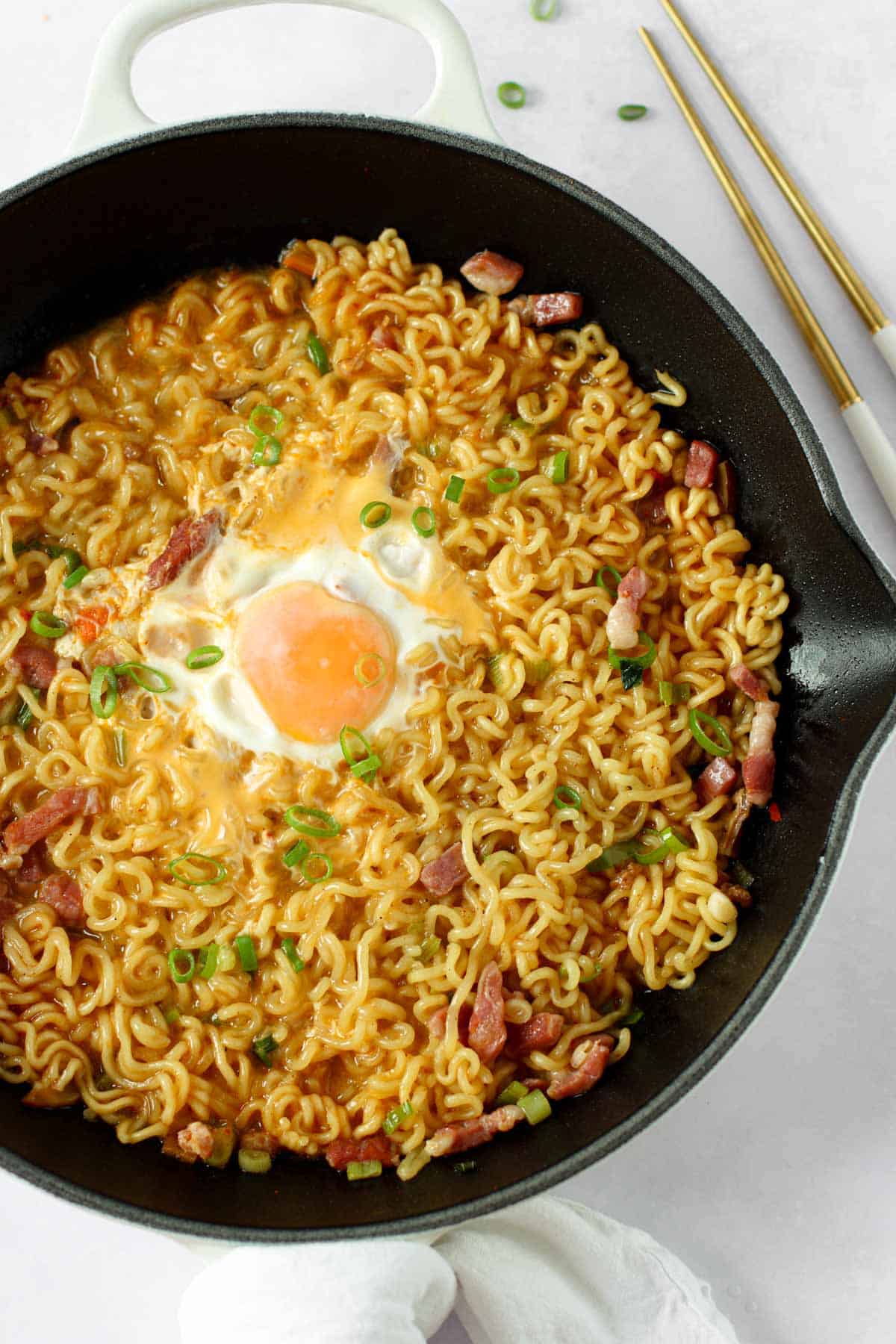
Stir-fried Shin Ramyun is a soup-less Korean noodle dish that combines crispy-edged noodles with sautéed bacon, vegetables, and a savory oyster-soy glaze, finished with a fried egg and sesame seeds—ready in minutes.
Stir-fried Shin Ramyun is a soup-less Korean noodle dish that combines crispy-edged noodles with sautéed bacon, vegetables, and a savory oyster-soy glaze, finished with a fried egg and sesame seeds—ready in minutes.
Check what you already have. We'll leave it off your shopping list.
CookOS may earn a commission from Instacart orders.

Prices vary by store
*Service fees apply. Instacart® and the Instacart logo are registered trademarks of Maplebear Inc. d/b/a Instacart.
Wash and slice the cabbage into thin slices.
Wash and slice the carrots into long, thin slices.
Cut the bacon into ½ inch pieces.
Wash and slice the garlic into thin slices.
In a bowl, mix ¼ cup of water, oyster sauce, soy sauce, and 4 tsp of the soup powder from the Shin Ramyun packet.
Fry the egg and set aside.
Boil the noodles with the remaining water, vegetable flakes, and remaining soup powder. Cook the noodles for 2 minutes and drain.
In an oiled pan, sauté in order the garlic, bacon, and cabbage. Add the noodles and sauce, and cook for another 2½ minutes.
Place the noodles on a plate, top with the fried egg, and sprinkle a pinch of sesame seeds.
Best served immediately. Leftovers can be refrigerated up to 2 days and reheated gently in a pan with a splash of water, though noodles soften on standing.
Yes, but Shin Ramyun's flavor packet is specifically designed for this dish. Other brands work, though taste and spice level will vary.
Cook the noodles for exactly 2 minutes, then drain thoroughly before adding to the pan. Don't overcrowd the pan when stir-frying.
Yes; omit the bacon and use vegetable oil instead. Increase oyster sauce slightly or substitute with mushroom sauce for depth.
The fried egg is traditional but optional. You can skip it or use a soft-boiled or poached egg instead.
Yes; wash, slice, and store vegetables in containers up to 1 day ahead. Cook and eat fresh for best texture.