Check what you already have. We'll leave it off your shopping list.

Prices vary by store
*Service fees apply. Instacart® and the Instacart logo are registered trademarks of Maplebear Inc. d/b/a Instacart.
CookOS may earn a commission from Instacart orders.
Prep the greens. Wash the dandelion greens thoroughly, making sure all dirt and grit has been removed. Once cleaned, cut the leaves crosswise into 3-inch lengths.
Blanch the greens. Bring a large pot of water to a boil and season with salt. This will help enhance the greens’ flavor. When the water is boiling, add the greens by the handful, stirring them around to submerge them completely. Once the water returns to a boil, cook the greens for about 5 minutes, until they are wilted and their stems just tender. Using tongs or a large skimmer, transfer the greens to a bowl.
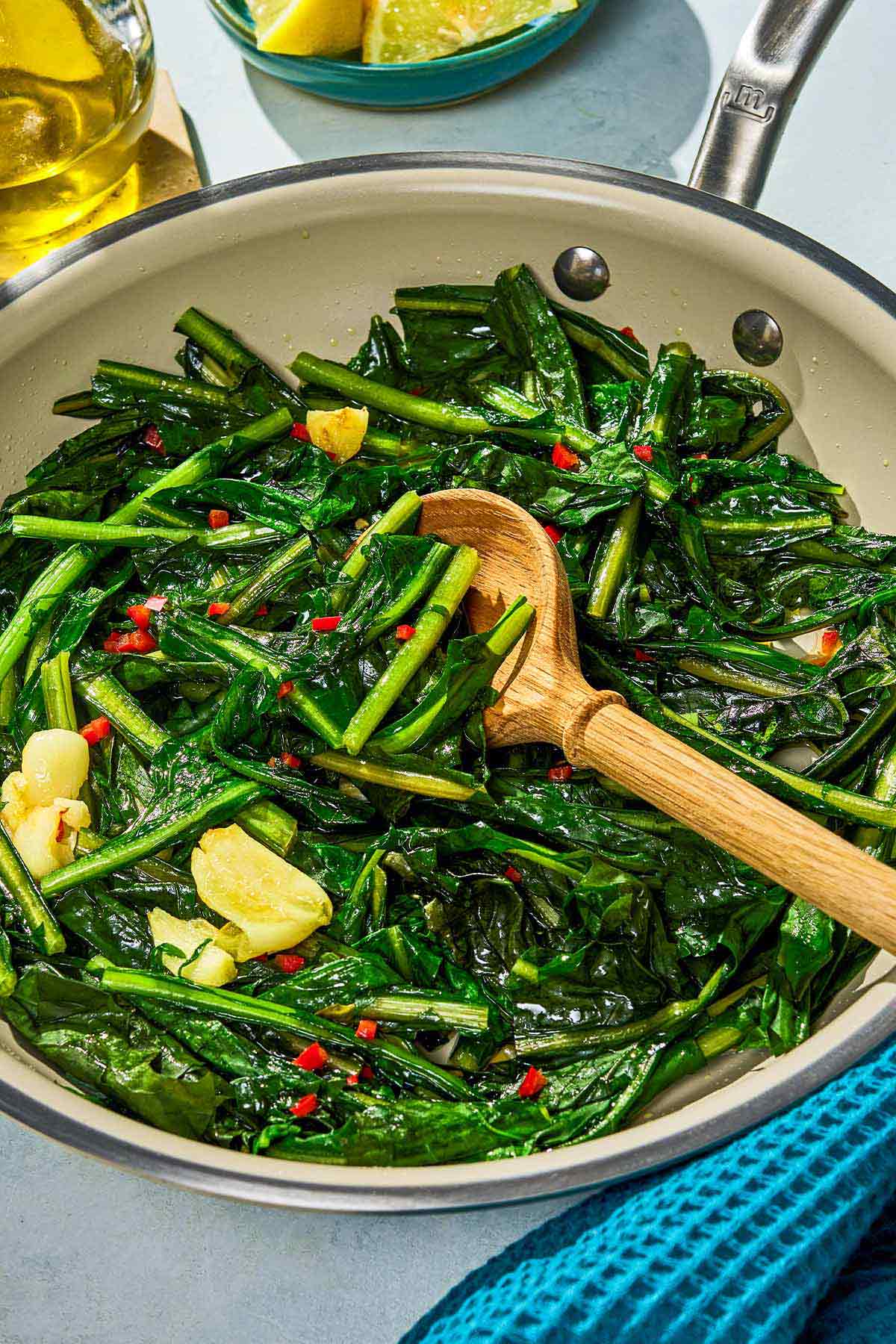
Sauté the garlic. Add 4 tablespoons extra-virgin olive oil to a wide, shallow sauté pan or skillet and drop in the crushed garlic cloves; add one for mild garlic flavor, two for more robust. Set the pan on medium-low heat and add the chili pepper. Cook, pressing down on the garlic cloves to release their flavor, until the garlic is softened but not browned, about 5 minutes.
Sauté the greens. Add the blanched greens to the pan and stir to coat them with oil. Cook on medium, allowing the greens to sizzle lightly, until they are silky and tender, but not over cooked. Season to taste with salt.
Finish and serve. Transfer the greens to a bowl. Squeeze a little fresh lemon juice on top, if you like, and drizzle with a thread of good olive oil. Serve hot, warm, or at room temperature.
Refrigerate blanched greens in an airtight container up to 1 day; reheat gently in a pan with a drizzle of olive oil. Finished dish is best eaten fresh but keeps 2 days refrigerated.
Blanching removes excess bitterness and softens the leaves, making them more tender while the sauté adds richness and flavor in the ripassare finish.
Yes, thaw and squeeze out excess moisture first, then skip the blanching step and proceed directly to sautéing in the pan.
They should be tender but still hold their shape, with no raw bitterness when tasted—typically 2–3 minutes in the pan after blanching.
Ripassare means 'to pass again'—greens are cooked twice (blanched, then sautéed) to achieve tender texture and balanced flavor; regular sautéing is single-stage.
Yes; blanch and cool the greens up to 1 day ahead, then sauté just before serving for best texture and flavor.